
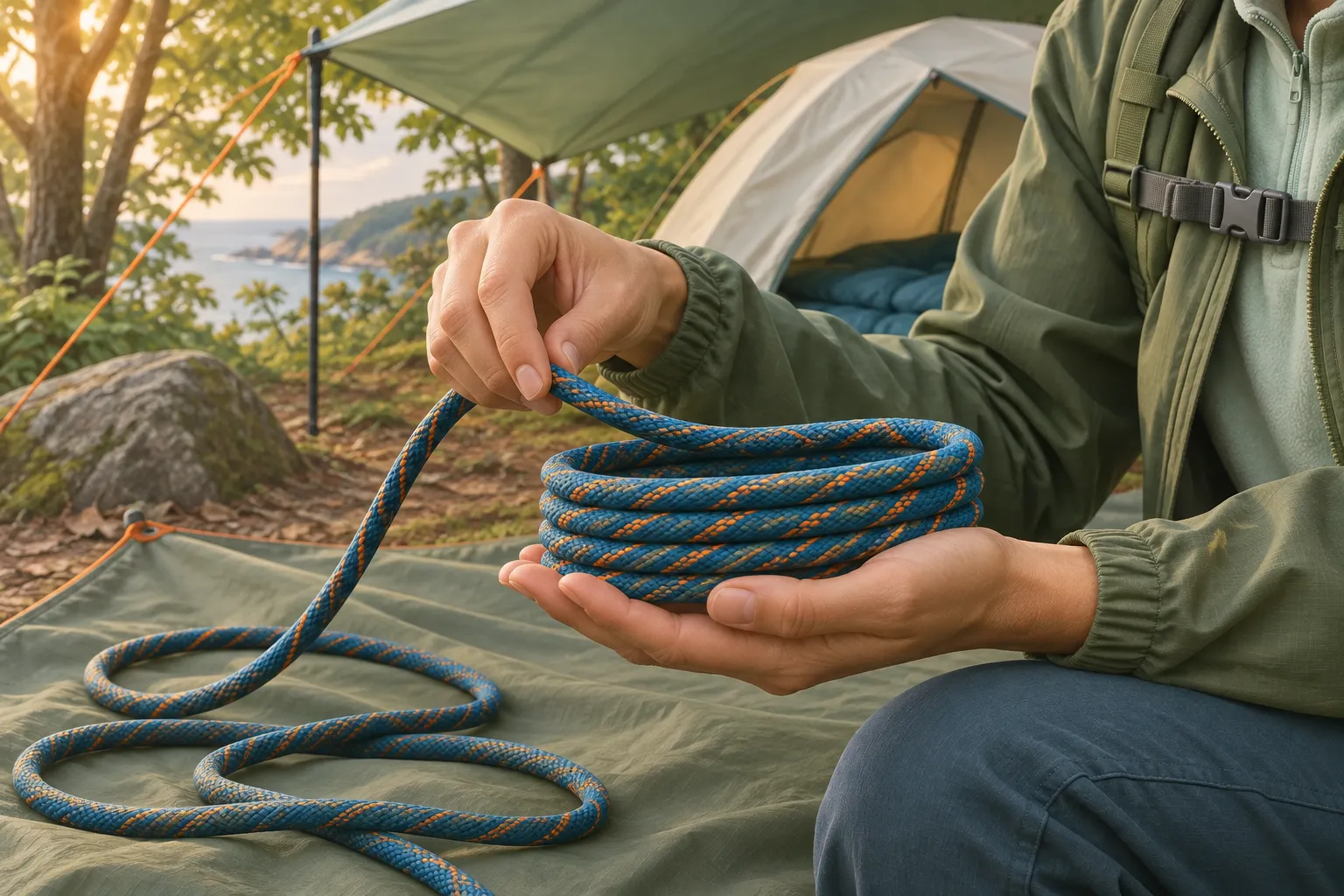
How to coil a rope by hand
For camp cord, a clothesline or a short utility rope up to about 50 feet, the over-under hand coil is the one to learn. It keeps the rope flat, packs small and runs out cleanly next time. You hold the coil in one hand and build it with the other.
Hold the end. Take the end in your left hand with a tail hanging a little longer than the coil will be. That tail stays outside the coil.
Make the first loop. With your right hand, slide out an arm’s length of rope and lay it in your left hand as a loop, about knee to waist size.
Turn the next loop under. Roll the rope between your fingers so the next loop lies the other way, under the first. Then over, then under again.
Wrap the top. With a couple of arm lengths left, wrap the working end tightly around the top of the coil three or four times, working up toward your hand.
Lock it. Push a bight of the working end through the coil above the wraps, open it into a loop, slip that loop down over the top of the coil and pull the end tight.
The over-under turn feels awkward for the first few loops and then becomes automatic. If it never clicks, lay the loops as a figure 8 in your hand instead. A figure 8 coil is less neat but also adds no twist.
How to coil a rope without tangling
Most tangles start with twist. Every loop you wind in the same direction puts a half twist into the rope. After enough loops it wants to curl back on itself, and it kinks as soon as you shake it out. The over-under coil cancels each twist with the next loop.
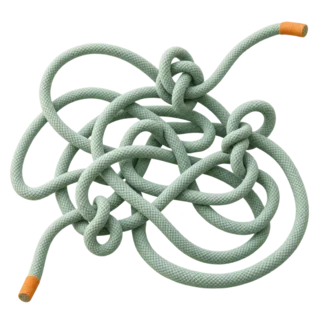
Already twisted?
Run the whole rope through your hands from one end to the other, letting the free end spin. Repeat once or twice, then coil again.
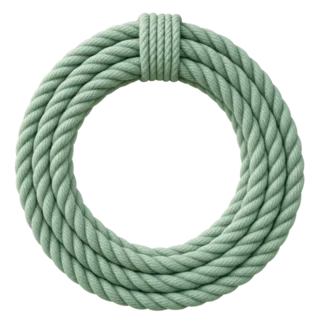
Over-under coil
Alternate loops cancel the twist. Equal loop sizes help the coil come off without snags.
Don’t wind rope between your hand and elbow: every turn twists it, and the loops come out uneven.
Ways to coil a rope
Pick the coil by rope length and what you do next. We use the hand coil for camp cord and a butterfly or a rope bag for anything long.
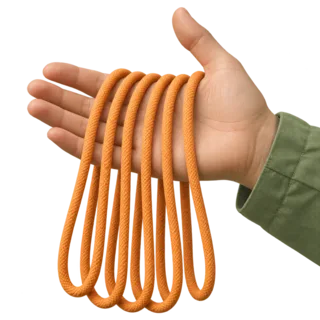
Hand coil
Over-under loops in one hand. Utility rope, clotheslines and guylines.
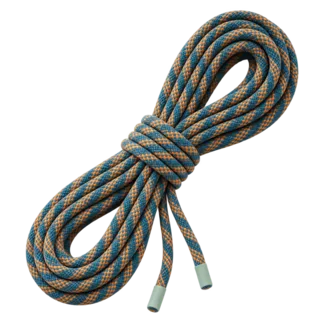
Butterfly coil
Folded in long loops over the shoulders. Climbing rope and anything over 100 feet.
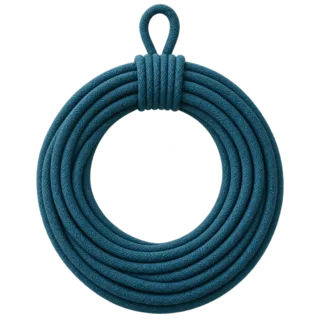
Mountaineer’s coil
A round coil with wraps at the top. Traditional, but more prone to twist.
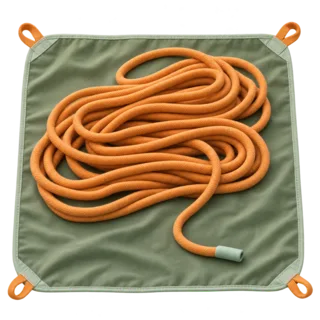
Flaked pile
Rope fed into a loose heap so it runs freely. For using it right away.
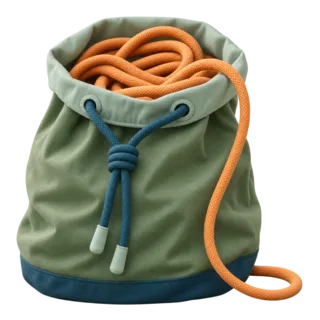
Rope bag
Flake it straight into a bag. The simplest way to store a climbing rope.
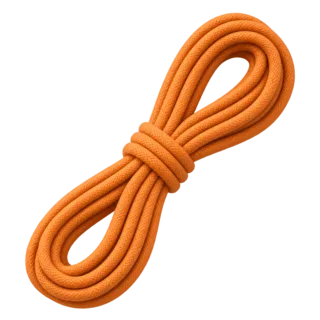
Paracord hank
A short bundle with wraps at the middle. For cord under about 50 feet.
Butterfly coil for a climbing rope
A butterfly coil lays the rope back and forth over your shoulders or hand instead of around in a circle, so it adds no twist. It is the usual way to coil a climbing rope for carrying. Start from the middle for a quick coil, or from the two ends if you want a loop to hang it from.
Find the middle and double the rope. Fold the rope in half so both ends lie together. Hold the doubled rope about 6 feet from the fold and let that fold hang free.
Drape armfuls over your shoulders. Lay the doubled rope across the back of your neck, then pull out about 4 feet and lay it across again, so loops hang in front of you on the left and right in turn.
Stop with the tails long. Leave 8 to 10 feet of both strands for a backpack carry, a bit less if you only hang it.
Wrap the middle. Lift the coil off, hold it at the top and wrap the doubled tails around it several times, starting a hand’s width below the top. Keep most of the tail length free.
Tie it off. Push a bight of the tails through the top of the coil, then pass the two strands over the top and through that bight. Pull snug; the free tails become the shoulder straps.
Carry a climbing rope as a backpack
Put the coil on your back and bring one tail over each shoulder. Pass them back under your arms, cross them over the coil, bring them to the front and tie them around your waist with a square knot. Lean forward while you tie so the coil sits high. On narrow, brushy trails the loops can catch on branches; tuck them in or tighten the wraps.
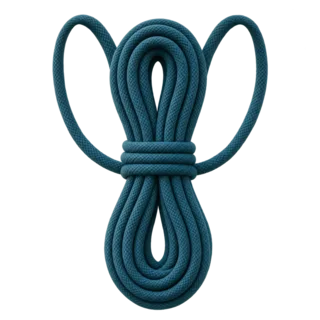
Backpack tie
Tails over the shoulders, crossed behind, tied at the waist. Both hands stay free.
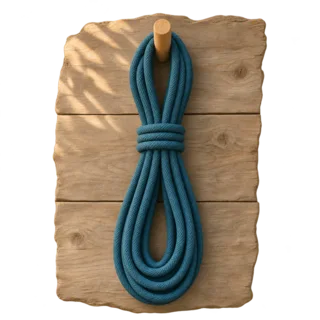
Hang loop
Start from the two ends instead of the middle and leave 2 to 3 feet unwrapped at the top. Hang the coil from that loop.
Glacier travel uses coils tied to the harness, a different technique. We recommend learning it on a course.
How to coil a rope for storage
A climbing rope does not need a coil at all for storage. Flake it loosely into a clean rope bag and it will be ready to use without tangles. For utility rope, a hand coil or a butterfly started from the ends gives you a loop to hang it from a peg. However you store rope, the rules are the same.
Dry, cool and shaded
Sunlight and heat weaken nylon and polyester. Store rope at room temperature.
Away from chemicals
Keep rope out of the car and away from batteries, fuel and solvents. Battery acid damage is invisible, so retire a rope that may have touched it.
Never put a wet rope away. Lay it out loosely and flat in the shade to dry. Mammut advises against hanging it up wet, drying it on a heater or putting it in a tumble dryer. To wash it, use lukewarm water and a mild soap, then dry it the same way.
Long rope and paracord
A long rope, 100 feet or more, is easier in a butterfly or straight into a bag than in a hand coil, which gets heavy and twists. A short length of paracord is the opposite: wind a few small loops, wrap the cord around the middle and lock the end with a couple of half hitches. Pull the end and the hank falls open.
Laid rope and boat rope
Three-strand laid rope, the twisted kind used on docks and boats, has a built-in direction. Almost all of it is right-hand laid and should be coiled clockwise. Coiled the other way, it kinks and forms hockles. Braided rope has no lay, so use the over-under coil.
How to uncoil a rope without tangles
Undo the wraps carefully; most tangles of an old coil happen in the first seconds. Lay the coil on the ground with the starting end underneath, the tail that was left outside, and pull from the other end. For a butterfly, open the wraps and let the loops fall into a loose pile. New rope from the store often carries factory twist, so run it through your hands end to end before the first coil.
Coiling to throw a line. For a bear hang or a tarp line, coil loosely in your hand, keep hold of the end, and throw the whole coil underhand. It pays out as it flies.
Rope coiling questions
What is a coil of rope called?
A coil, or a hank when it is a small bundle of cord. Sailors also call rope laid out in a loose pile a flake.
What are the different ways to coil rope?
The main ones are the over-under hand coil, the butterfly coil, the mountaineer’s coil, the figure 8 coil, a flaked pile or rope bag, and a hank for short cord.
How do you coil a rope without tangling?
Alternate loops over and under so no twist builds up, keep the loops the same size, and leave the starting end outside the coil.
What is a butterfly coil?
A way to coil a long rope by folding it back and forth over your shoulders, then wrapping and tying the middle. It adds no twist and can be carried like a backpack.
How do you coil a climbing rope?
Use a butterfly coil: double the rope from the middle, drape armfuls of about 4 feet over your shoulders, wrap the middle with the tails and tie off. For storage, flake it into a rope bag.
How do you store rope?
Dry, loose, out of the sun and away from heat and chemicals, either coiled and hung on a peg or flaked into a bag.
How do you tie off a coil of rope?
Wrap the end around the top of the coil several times, push a bight through the coil above the wraps, bring it down over the top and pull the end tight.
How do you uncoil a rope?
Undo the wraps, lay the coil down with the starting end underneath and pull from the top. If it twists, run it through your hands end to end.
Take a rope on your next trip Pick a route and pack a short utility rope for the camp.