
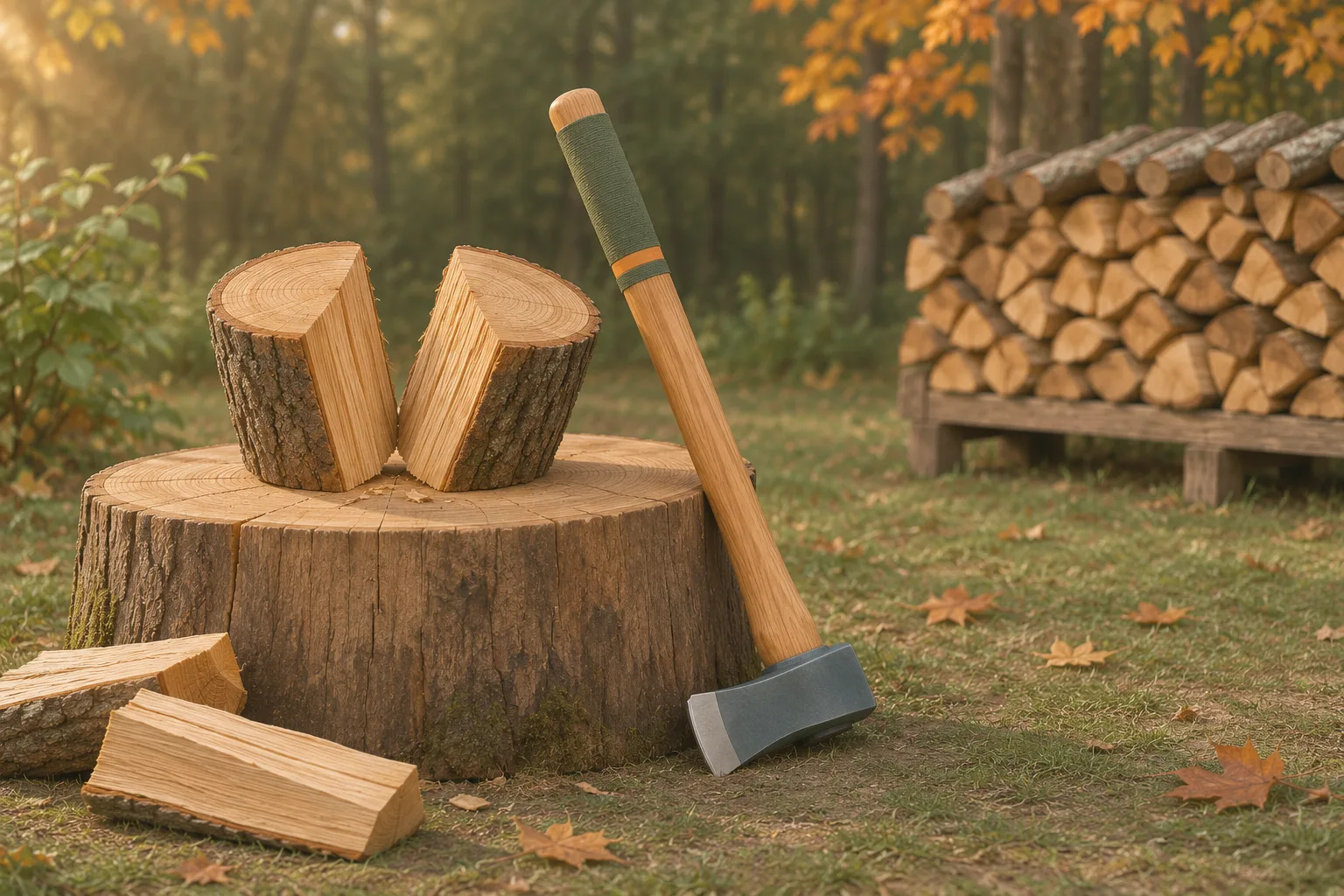
How to chop wood with an axe, step by step
For firewood, chopping wood almost always means splitting. You drive a tool into the end of a short log, called a round, until it breaks apart along the grain. The steps below work with a splitting axe or a maul. They follow the axe and hatchet job hazard analysis that Rocky Mountain National Park wrote for its crews, plus the splitting advice of the Swedish axe maker Gränsfors Bruk.
Check the tool. The head must sit tight on a handle with no cracks or splits. Put the sheath aside where you can see it.
Clear your circle. Nothing within one arm length plus three tool lengths: no branches, no people, no dog. Kick loose bark and limbs away from your feet.
Set the round on the block. Stand it on its flattest end, close to the far edge of the chopping block, so a miss lands in the block and not your shins.
Pick your target. Look at the top end. Aim for a crack running toward the center, and keep the edge off knots. On a big round, start near the edge.
Find your distance. Feet planted, weight even, close enough that the edge reaches the middle of the round with your arms straight. Keep the blade flat to the end grain so it does not glance.
Lift and let it fall. Raise the tool above your head, slide your top hand down the handle as it drops, and bend your knees at impact. Let the weight of the head do the work.
Work around the round. Split off slabs from the edge, turn the round, repeat. Halve and quarter the pieces until they fit your stove or fire ring.
Swing so a miss lands in the block, never toward your legs or feet. Bent knees lower the arc and stop the head early.
Splitting axe vs maul: which tool splits wood
A splitting axe and a splitting maul do the same job with different weight. Both have a wedge-shaped head that pushes the fibers apart. The maul is heavier and blunter. Council Tool’s Ol’ No. 7 maul, for example, has a 7 lb head on a 36 inch handle. Gränsfors calls its maul the heaviest of its splitting axes, built for “very thick and knotty pieces of wood.”
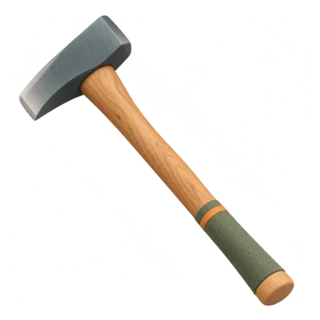
Splitting axe
- Lighter head, faster swing.
- Good for medium rounds and easy-splitting wood.
- Less tiring over a long session.
- Do not hammer it or use it as a wedge.
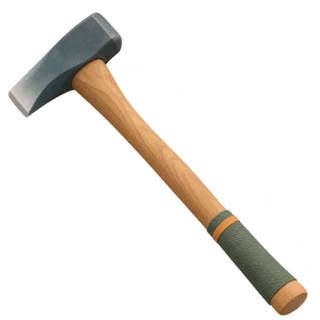
Splitting maul
- Heavy head that bursts big rounds.
- Good for large, tough or knotty wood.
- Tires you faster.
- Its flat poll can drive a steel wedge.
Which to buy? If most of your rounds are under about a foot across and the wood splits easily, a splitting axe is enough. If you buy or cut big hardwood rounds, get a maul and a wedge. For a beginner, we would pick the tool you can swing accurately over the heaviest one.
Can you split wood with a felling axe?
Small, straight pieces, yes. A felling axe has a thin head made to cut across the grain, so in a thick round it tends to bite deep and stick instead of forcing the wood apart. Gränsfors also warns not to use an ordinary axe as a wedge or sledgehammer: the head and eye are not built for it.
Wood chopping block: what to split wood on
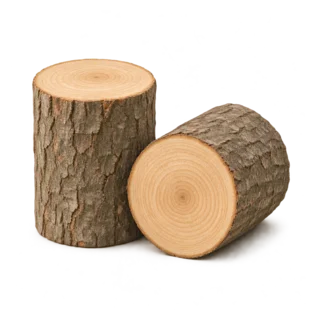
A chopping block is a wide, sawn round of hardwood standing on level ground. Gränsfors suggests a block “of about knee-height.” It raises the work so the tool finishes its swing in wood, not dirt. It also keeps the edge off stones that would chip it.
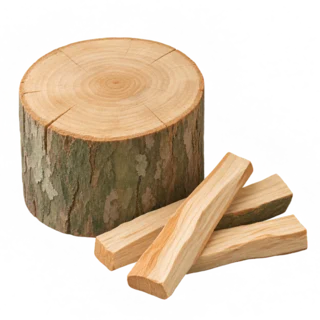
A good block
Wide, heavy, flat on both ends, sitting on soil or grass. A hard-to-split species such as elm makes a good block.
What to avoid
Concrete, gravel, rock and the bare ground. A miss there dulls the edge or bounces the tool back toward you.
How to split wood without a stump? Use the biggest round in your pile as a temporary block, or lay a thick log flat and split on its middle. Whatever you use, it should not rock when you push it with your foot.
Big logs, knots and the hardest wood to split
Rounds with big diameters, knots or twisted grain take more work. On a wide round, take slabs off the edge first so the middle gets smaller.
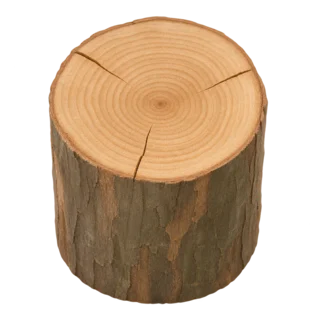
Big logs
Read the cracks and split slabs off the edge first. If a round is too heavy to lift, split it where it lies with a wedge and sledge, not a swung axe.
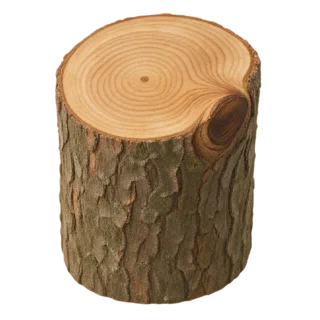
Knots
Fibers wrap around a knot and lock together. Choose a line that misses the knot. If you cannot, Gränsfors advises striking through the center of the knotty log; never just beside the knot.
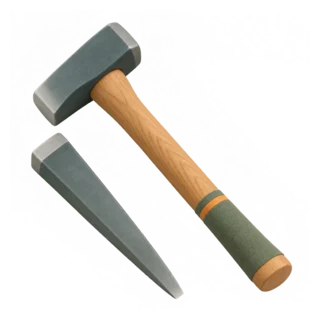
A stuck tool
Do not lever the handle sideways. Turn the round over and strike it again, or drive a wedge in beside the stuck head.
Species matter too. University of Kentucky Extension calls elm, sycamore and sweet gum “extremely difficult to split,” and Utah State Extension rates beech, black locust and American elm as difficult. In the University of Arkansas table, white oaks split easily and red oaks and ash sit in the middle. Their fibers are twisted or interlocked, so they tear instead of opening. For those, use a maul and wedges and expect slow going.
How to split wood without an axe: wedge and sledgehammer
A steel splitting wedge and a sledgehammer split almost anything an axe can, more slowly and with less skill. It is also the fix for a round that has already beaten your axe.
Put on safety glasses. Gränsfors warns that a fragment of steel can fly off when metal strikes metal.
Set the wedge in a crack. Tap it in with a few light blows until it stands on its own.
Drive it with a sledge or maul. Use full, square blows. Never strike a wedge with the back of a regular axe.
Add a second wedge if needed. Drive it into the crack the first one opened, which frees the first wedge.
Retire a mushroomed wedge. When the struck end spreads into a burred rim, grind it off or replace the wedge. OSHA’s rule for hand tools says wedges and chisels must be kept free of mushroomed heads, because those burrs break off as fragments.
With no axe and no wedge, saw the wood to short lengths and burn it whole, or buy split wood. We do not recommend hammering a kitchen knife into logs: the blade can snap.
How to split kindling with a hatchet
A hatchet splits small, dry pieces into kindling. Never hold a piece upright with one hand and swing at it with the other. The Rocky Mountain crew guide gives a safer method that keeps your fingers out of the path:
Kneel behind the block. Crouch or kneel on one knee so a miss goes into the block.
Start the blade lightly. Tap the hatchet edge into the end of the piece until it holds.
Let go of the wood. Remove your holding hand completely.
Swing both together. Bring the hatchet and the stuck piece down onto the block. Repeat until the sticks are as thin as you need.
At a campground, this is often the only splitting you need: bought firewood plus a hatchet. Buy that wood near where you burn it. Don’t Move Firewood says “10 miles or less is best” to avoid spreading forest pests. Our hatchet vs axe guide covers which tool to pack for camping.
Cut firewood to length by hand
Splitting starts with rounds of the right length. Measure your stove’s firebox or your fire ring and cut a little shorter, so a piece fits with room around it. Shorter rounds also split more easily. To cut firewood to length without power tools, use a bow saw and hold the log off the ground.
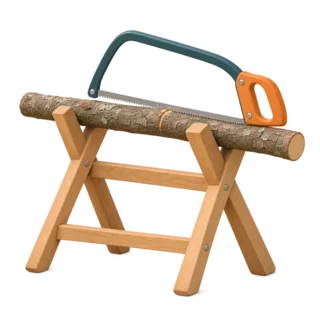
Sawbuck and bow saw
An X-shaped stand holds a long branch or pole at waist height while you saw. The kerf stays open and the blade stays out of the dirt.
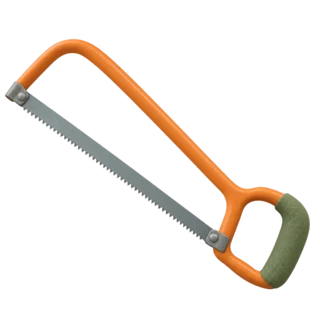
Bow saw alone
For a few logs, rest each one on another log so the cut opens as you saw. Let the saw do the work with long, even strokes.
A chainsaw is faster for a winter’s supply, but it brings its own gear and training; we will cover it in a separate chainsaw safety guide.
Green wood or seasoned: when to split and how to dry
Split soon after cutting. Splitting exposes more surface, so the wood dries faster, as University of Arkansas Extension notes. Whether green wood is easier to split than seasoned wood depends on the species. Extension services disagree. NC State says cured wood splits more easily than green wood. Penn State says splitting with a maul or wedge “best done when the wood is frozen.” Our advice: split one green and one seasoned round of the same wood and keep whichever goes easier.
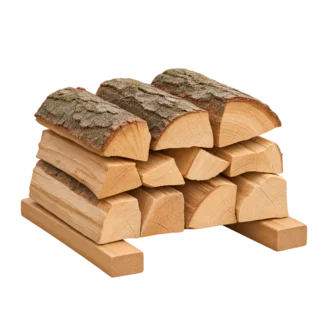
Stack it to dry
Off the ground on rails or pallets, with only the top covered. EPA says covering the sides traps moisture.
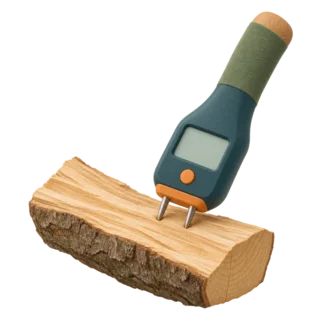
Check it before burning
Split a piece and press a moisture meter into the fresh face. Below 20 percent is ready to burn.
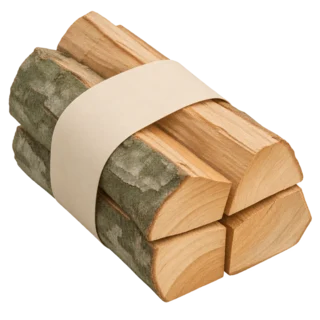
Give it time
EPA Burn Wise suggests six months for softwood and at least a year for hardwood.
The EPA’s Burn Wise guidance is short: burn only dry, split, well-seasoned wood, at less than 20 percent moisture. Wet wood smokes, wastes heat and coats the chimney.
When you buy split wood, the legal unit is the cord: 128 cubic feet of neatly stacked wood, for example a pile 4 feet high, 4 feet deep and 8 feet long. Connecticut, following the national NIST handbook, bars sellers from using “face cord” or “rick,” because those terms have no fixed size.
How to split wood safely
Most splitting injuries come from glancing blows, flying chips and a tired swing. The park crew rules are simple: eye protection, leather or cut-resistant boots with non-slip soles, heavy gloves and long sleeves. They also recommend chaps, and they warn that chips can fly more than 20 feet. Keep others well outside your circle.
Stop before you are tired. Fatigue is when swings start to wander. Split in short sessions, lift rounds with your legs, and roll heavy ones instead of carrying them.
Keep the edge sharp, since a dull one glances off more easily. Our guide on safe axe use also covers carrying and storing the tool.
How to chop wood questions
What is the easiest way to split firewood?
Short rounds of easy-splitting wood, a splitting axe or maul, a knee-high block, and strikes aimed at existing cracks near the edge. For a large pile, a rented hydraulic splitter is easier still.
Do you split wood with an axe or a maul?
Either. A splitting axe is lighter and faster for medium rounds; a maul is heavier and better for big or knotty wood. A felling axe is the wrong tool for big rounds.
What is the best surface to chop wood on?
A wide, stable chopping block standing on soil or grass. Avoid rock, gravel and concrete.
Should logs be split wet or dry?
Split soon after cutting so the pieces dry faster. Some woods split more easily green, others seasoned or frozen; try a few rounds.
How long does cut firewood need to dry?
Plan on six months for softwood and a year or more for hardwood, split and stacked off the ground with only the top covered. Aim for less than 20 percent moisture.
What is the hardest wood to split?
Woods with twisted or interlocked grain. Extension services name elm, sycamore, sweet gum, beech and black locust.
How much split wood is in a cord?
A cord is 128 cubic feet of wood ranked and well stowed, for example a stack 4 by 4 by 8 feet. A “face cord” has no fixed legal size.
Can you split wood with a hatchet?
Small pieces and kindling, yes. Kneel behind a block, start the blade lightly in the piece, let go, and swing hatchet and wood down together.
Is chopping wood a good workout?
It works your legs, back, core and arms, but the risk comes with fatigue. Treat it as work, with short sessions and good technique.
Planning a campfire trip? Find a route with a campsite and check its fire rules before you pack a hatchet.