
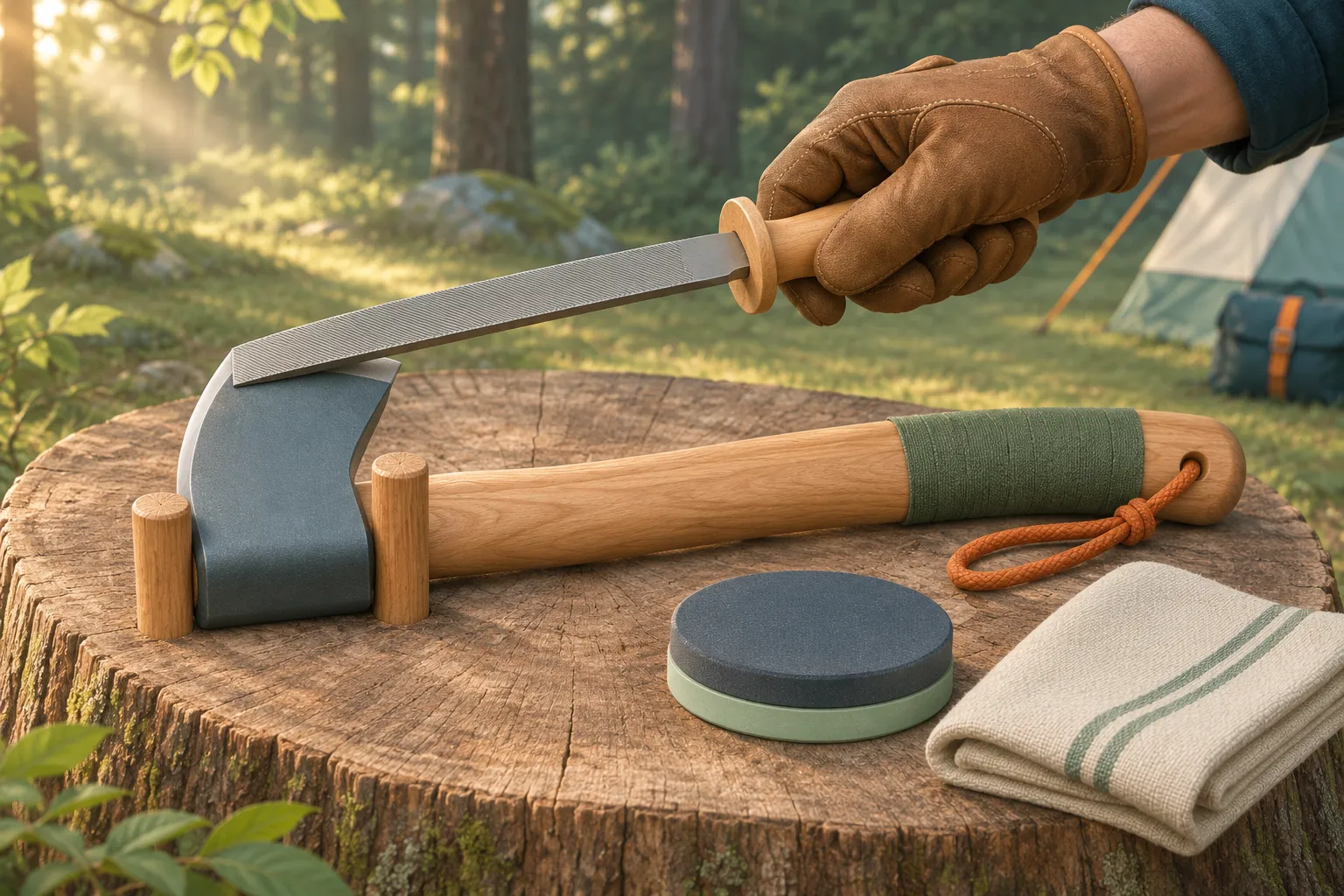
How to sharpen an axe in six steps
Gather a flat mill file, a sharpening stone, leather gloves and safety glasses. A dull axe takes about half an hour; a touch-up, a few minutes. A hatchet takes the same steps, only faster. Keep the shape of the bevel the maker gave the axe, and take off only as much steel as the damage needs.
Secure the head. Clamp the head in a vise with wood or leather on the jaws, or lay it flat on a log between two stakes. Your free hand holds the handle or the back of the head, never in front of the edge.
Mark the bevel. Color the bevel with a permanent marker. The ink shows where the file is cutting and where it is not.
File into the edge. Push the file across the bevel from the cheek toward the cutting edge, lift it off on the way back, and work along the whole edge. Stop when a fine burr forms on the other side.
Turn the axe over. File the second side the same way, with about the same number of strokes, until the burr flips back.
Hone with a stone. Rub the bevel with small circles of a wet puck or whetstone, coarse side first, then fine, on both sides. This removes the burr and the file marks.
Test, oil and sheath it. Check the edge on a scrap of wood, wipe the head with a drop of oil and put the sheath back on.
Most axes only need the last two steps. If the edge is just a little dull, skip the file and go straight to the stone. Save the file for a chipped or very dull axe: every pass removes steel you cannot put back.
What you need to sharpen an axe
Three things cover almost every axe and hatchet. Buy a file and a stone once and they last for years.
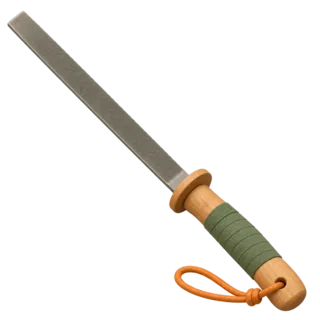
Mill bastard file
A flat file, 8 to 10 inches long, with a handle and a guard. It reshapes the edge and removes chips.
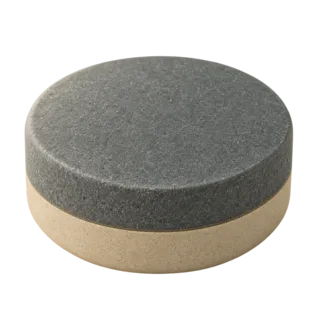
Puck or whetstone
A round two-sided puck, coarse and fine, or a bench whetstone. It hones the edge after the file.
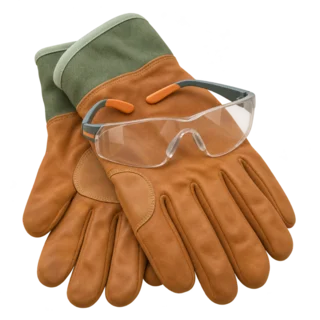
Gloves and glasses
Heavy leather gloves and eye protection. A slipping file and flying filings are the real hazards.
Axe sharpening angle
There is no single correct sharpening angle for an axe, and makers do not agree on a number. Council Tool gives about 25 degrees with a slightly convex shape. Brant & Cochran says most axes have 30 to 40 degrees right at the edge. So keep the angle your axe already has. The marker trick shows it: if the ink disappears evenly across the bevel, your file is following the bevel the maker ground.
Most American and Scandinavian axe bevels are slightly rounded. This convex grind leaves steel behind the edge to absorb hits. Rock the file or stone a little as you work to keep that curve. On those axes, a flat bevel with a hard shoulder tends to stick in the wood. Flat scandi bevels on some hatchets are the exception, see below.
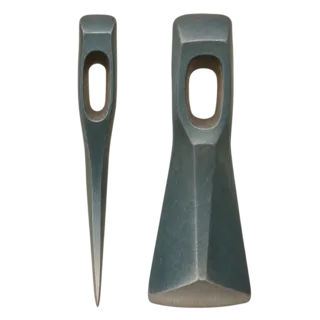
Felling axe and hatchet: thinner
A slim, keen edge that bites deep across the grain. A hatchet for kindling and carving can take a finer edge still.
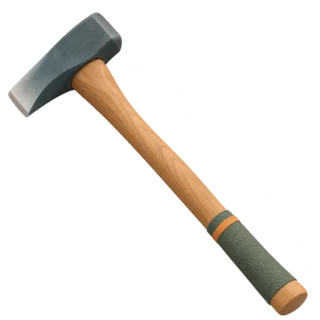
Splitting axe and maul: blunter
A steeper, thicker edge that pushes the wood apart. It needs to be clean and even, nowhere near razor sharp.
How to sharpen an axe with a file
A file is the fastest way to fix a dull or chipped axe by hand. Use a mill bastard file. “Mill” means one row of parallel teeth; “bastard” is the medium-coarse grade.
Fit a guard and put on gloves. Slide a disc of leather, wood or old fire hose onto the file in front of the handle.
Push, then lift. The file cuts only on the push stroke. Dragging it back dulls the teeth, so lift it and never saw back and forth.
Work the whole edge. Move along the edge in overlapping strokes so you do not file a dip into one spot. The scratches fan out across the bevel.
Feel for the burr. Stroke a gloved fingertip across the other side, from the cheek off the edge, never along it. A thin rough lip along the whole length means that side is done.
Keep both hands behind the edge. Your free hand holds the axe from behind the cutting edge. When you turn the axe over, put the file down first.
Axe sharpening stone: puck or whetstone
An axe sharpening stone finishes what the file started. A puck is the classic choice: you hold it in your hand and bring it to the axe, so you need no bench. Wet it first. Hold it by the rim with your fingertips, well back from the edge, and scrub the whole bevel with small circles. Keep going until the file scratches are gone, then switch to the fine side and repeat on both faces.
Puck
Round, two grits, fits in your hand. Best for the axe and for touch-ups at camp.
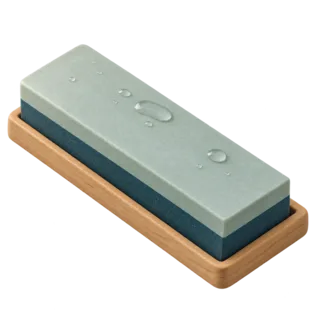
Bench whetstone
Flat and long. Good for a hatchet you can hold steady and draw across the stone.
Wet or dry? Use the liquid the stone was made for. Water stones and most pucks work with water; oil stones take a light honing oil. The liquid carries steel dust away so the stone keeps cutting. Diamond plates work dry or with a little water.
Can you sharpen an axe with a grinder?
Axe makers warn against a fast dry bench grinder or an angle grinder. The wheel heats the thin edge in seconds and can ruin the temper, the heat treatment that keeps steel hard. The edge then goes soft and dulls fast. A slow, water-cooled grindstone is fine. We would use a power grinder only on a badly damaged edge: light passes, steel kept cool enough to touch, then a file and stone by hand.
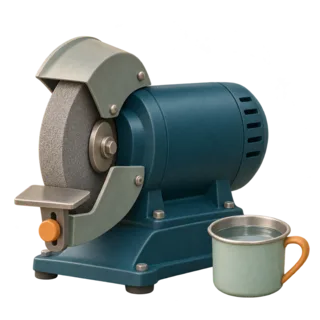
Bench grinder: last resort
Light touches only. If the steel gets too hot to hold, stop and dip it in water.
File: the safer choice
Slower, but it cannot overheat the edge. A Dremel or a drill attachment has the same heat problem as a grinder.
How to sharpen a hatchet
To sharpen a hatchet, follow the same six steps with a lighter hand. The short head is easy to clamp or hold flat on a log. Many hatchets carve and make kindling, so they can take a finer edge than a big axe. A small file and a puck are enough. If your hatchet has a flat, scandi-style bevel, lay the stone flat on the bevel and keep it there without rocking.
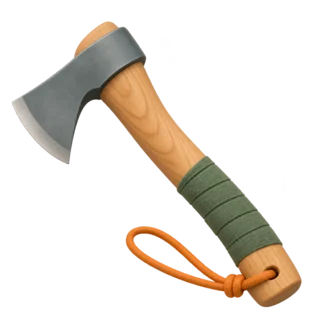
Camp hatchet
File only for chips. A few minutes on the fine side of the puck after each trip keeps it ready.
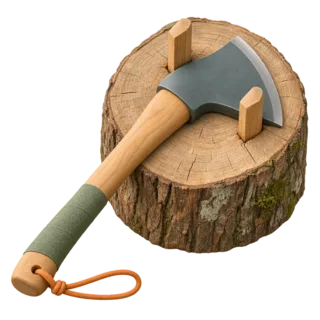
No vise?
Lay the head flat on a log or bench, edge out, and hold it with stakes or a clamp.
How to sharpen a splitting axe or maul
A splitting axe and a splitting maul work like a wedge, so the edge does less of the work. File out chips and rolled spots and keep the steep bevel even. Skip the fine stone: a fine edge on a maul tends to chip on the first knot. You want a clean edge that bites into the end grain without bouncing off.
How to sharpen an axe without tools
At camp you rarely need to reshape the edge, only touch it up. A flat, smooth, fine-grained river rock and some water will hone a dull edge in a pinch, slowly. It will not fix a chip. Two better options fit in a pack.
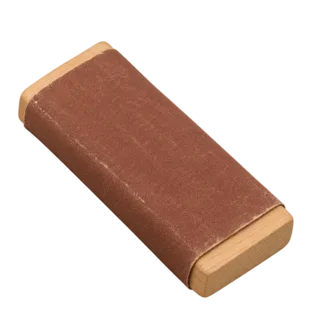
Sandpaper on a block
Wrap wet-and-dry sandpaper around a flat stick or block and use it like a stone, coarse grit first, then fine.
Pocket stone or puck
A small knife stone works on the bevel too. The slots of most pull-through knife sharpeners are too narrow for an axe head.
Dull, chipped or rusty axe
An old axe found in a shed usually needs the full job. Clean off the rust with steel wool or a rust eraser first, so the file cuts metal and not scale. Then file until the deepest chip is gone and the bevel is even again. On a very dull axe that can take an hour or more. Brand-new axes often ship with a rough factory edge too; a few minutes with a stone usually finishes it.
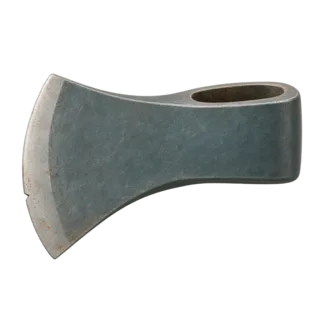
Chipped edge
File both sides until the notch is gone, then hone. A crack in the head means the axe is done.
Rusty head
Remove rust first, then sharpen, then oil. A bare edge left wet rusts again overnight.
How often should you sharpen an axe?
Hone after each day of use with the fine side of the puck. Reach for the file only when honing no longer brings the edge back, or after the axe hits a rock, a nail or the ground. Time to sharpen when the axe bounces off the wood, crushes fibers instead of cutting them, or shows a shiny rounded edge when you hold it to the light.
Test the edge and store the axe
Test on wood, not on your skin or thumbnail. A sharp axe slices a thin shaving off the corner of a dry board and leaves a clean, shiny cut on a branch. Hold the edge up to a light: a sharp edge reflects almost nothing, while dull or rolled spots show as bright lines. Then wipe the head dry, add a thin coat of oil and keep the sheath on. Store the axe somewhere dry and out of the sun.
Axe sharpening questions
What angle should I sharpen my axe?
Keep the angle your axe already has. Makers quote from about 25 degrees to 30–40 degrees at the very edge, with a slightly rounded bevel. Felling axes and hatchets are thinner, splitting axes and mauls steeper.
What type of file do you use to sharpen an axe?
A flat mill bastard file, 8 to 10 inches long, with a handle and a guard. A shorter one works on a hatchet.
Do you use a sharpening stone wet or dry?
Water for most pucks and water stones, light honing oil for oil stones. A diamond plate can go either way.
Is it okay to sharpen an axe with a grinder?
Only a slow, water-cooled wheel. A fast dry bench grinder or angle grinder can overheat the edge and soften the steel. A file and stone are slower and safer.
Can I sharpen my axe with a knife sharpener?
A flat knife stone works on the bevel. Most pull-through knife sharpeners do not fit the thick head.
How do you sharpen an axe without tools?
Wet sandpaper on a flat block, a pocket stone, or a smooth fine-grained river rock with water can hone a dull edge. None of them removes a chip quickly.
How often should you sharpen your axe?
Hone after each day of use. File only when honing stops working or after the edge hits a rock or a nail.
How long does it take to sharpen an axe?
A touch-up with a stone takes a few minutes. Filing a dull axe takes about half an hour; a chipped or neglected one can take an hour or more.
Are you supposed to sharpen an axe?
Yes. A sharp axe bites into the wood instead of glancing off, which makes it safer as well as faster. Splitting mauls need a clean edge but not a keen one.
Heading out with an axe? Pick a campsite route and check the local firewood rules first.