
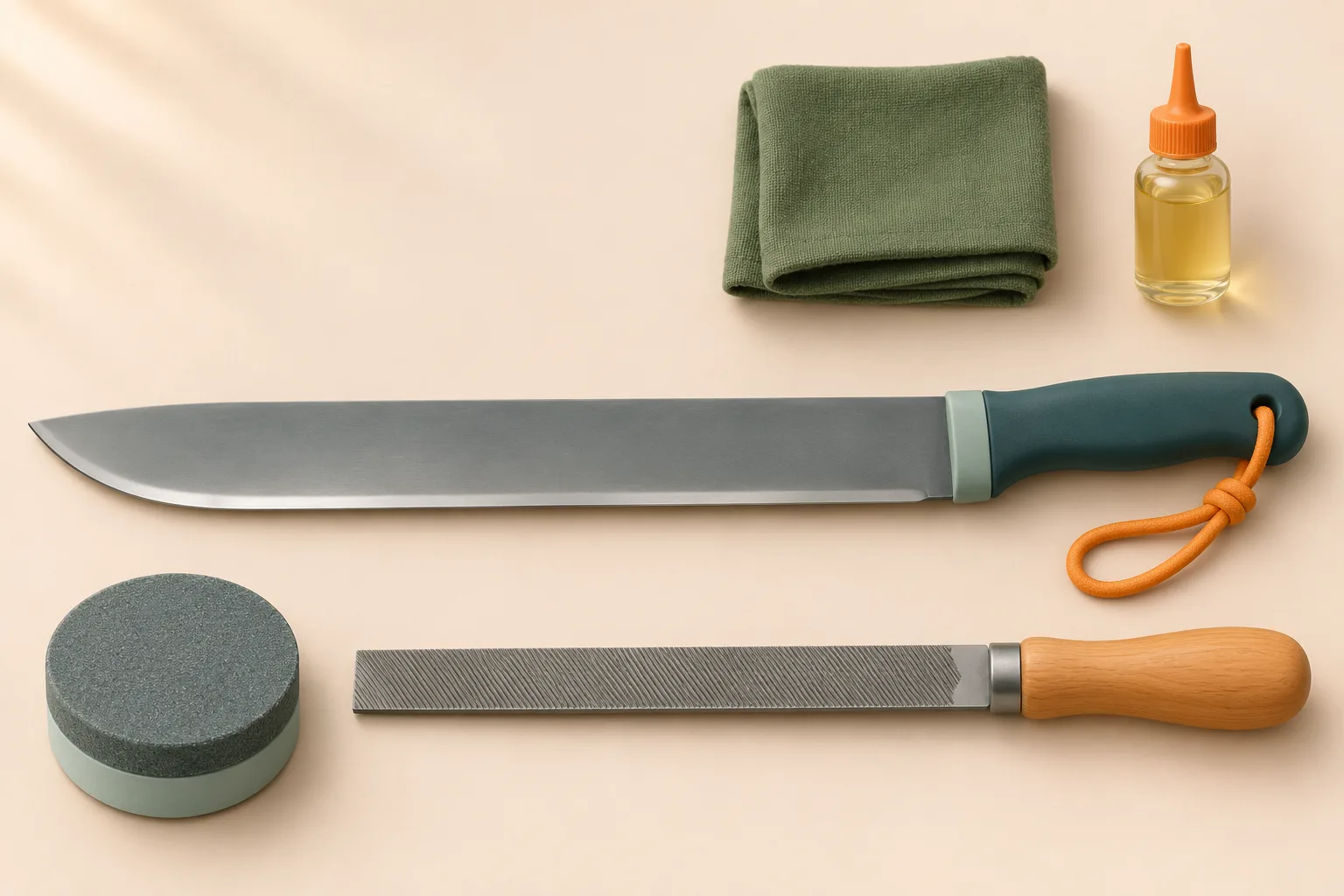
How to sharpen a machete: the short version
A machete is a working blade, and it is easier to sharpen than a kitchen knife. Machete steel is usually softer than kitchen knife steel, and most work does not need a razor edge. Most owners do the whole job with one tool, a flat file, and touch it up in the field with a small stone.
Clamp it. Clamp the spine in a vise or to a bench so the edge points up and away from you.
Find the old bevel. Look at the edge under light. Bright, rounded spots are dull; chips and dents show up as notches.
File the first side. Push it into the edge at the old bevel angle, handle end to tip, lifting it on the way back.
Raise a burr. Keep going until a thin lip runs along the full length of the other side.
Flip and repeat. File the second side with the same angle and the same number of strokes.
Hone and test. Remove the burr with a few light stone strokes, then slice a sheet of paper.
A dull machete with no chips needs only a short session. Chips and a first full bevel take longer.
What you need to sharpen a machete
You do not need a kit. Hardware stores sell everything below, and the file and stone also work on a hatchet, a shovel or garden shears.
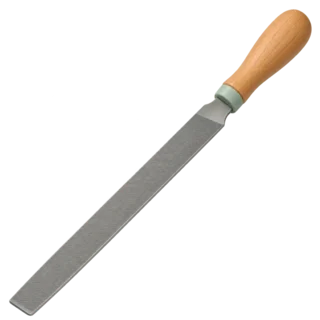
Mill bastard file
A flat, single-cut file 10 or 12 inches long. “Bastard” is the cut grade, between coarse and second cut: it removes steel quickly and still leaves a clean edge.
Fit a tight handle on the tang so it cannot stab your palm.
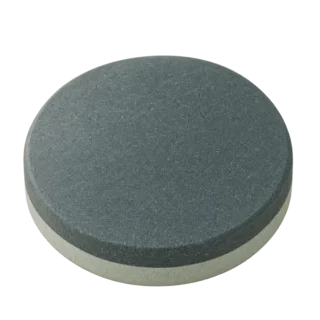
Puck or bench stone
A round two-sided axe stone or a coarse and fine bench stone. It smooths the file marks and keeps the edge going on the trail.
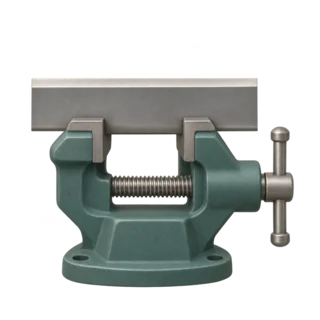
Vise or clamps
A bench vise with soft jaws, or two C-clamps holding the blade to a bench or log. Two free hands keep the angle steady.
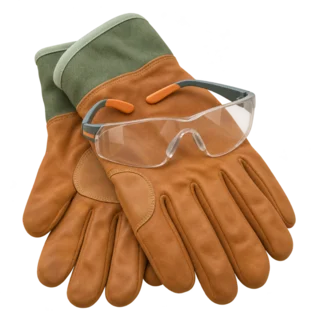
Gloves and glasses
Cut-resistant gloves, at least on the hand near the edge, and glasses for filings and grinder sparks.
- Water or honing oil for the stone
- Marker pen to check the angle
- Wire brush for rust
- Sheet of paper for testing
- File card to clean the file
Machete sharpening angle
A thinner edge cuts easier but chips sooner. Machete makers rarely publish an edge angle, and there is no standard one. Sharpening guides agree on a rough range: thinner for grass, thicker for wood. A kitchen knife edge is much thinner, because it only meets food and a cutting board. A machete meets stems, roots, grit and the odd hidden stone, so it needs more steel behind the edge.
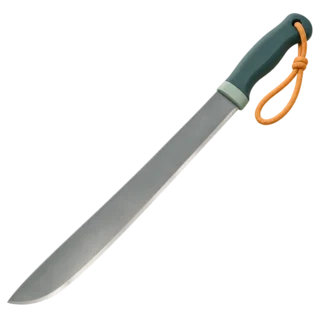
20 to 25° per side
For grass, vines, cane and light brush. Slices well and holds up to normal clearing work.
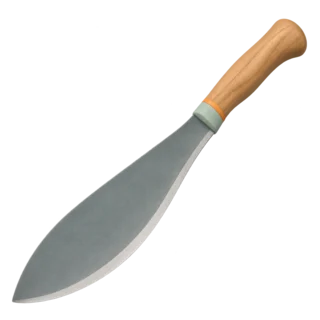
25 to 30° per side
For thicker woody stems, bamboo, or a blade that chips or rolls. Slower in grass, much tougher.
You do not need a protractor. If you lay the file flat on the blade, then lift its back edge until it sits on the bevel, you are close to the factory angle. A simple check is to color the bevel with a marker: after a few strokes the ink should be gone from heel to edge. If ink stays near the edge, raise the file; if it stays at the top of the bevel, lower it.
Match the old bevel first. Most machetes leave the factory with a usable angle. Following it is faster than grinding a new one, and you can adjust a few degrees later if the edge chips or feels too blunt.
Flat or convex edge?
Many machetes end up with a slightly rounded, or convex, edge after years of stone touch-ups. That is fine: a convex edge is strong and glances less. You get it naturally by rocking the stone a little as you work. A flat bevel from a file is easier for beginners to keep even. Both cut grass equally well.
How to sharpen a machete with a file
This is the method machete users have trusted for generations, and the one we recommend first. A file takes off steel fast, rarely overheats the edge, and costs a few dollars.
Secure the blade. Clamp the spine so the edge points up and away from you, just clear of the jaws. A blade that moves will ruin the angle and can cut you.
Hold the file with both hands. One hand on the handle, the other on the tip of the file, wearing gloves.
Push into the edge. A file cuts on the push stroke only. Push it forward and down across the bevel, with the stroke moving away from your body.
Lift on the return. Dragging the file back dulls its teeth. Lift it, bring it back, set it down at the same angle.
Work in sections. Do about a hand’s width at a time, from the handle end to the tip. On a curved belly, follow the curve with the file instead of the other way round.
Feel for the burr. On the other side, slide a gloved fingertip from the spine toward the edge and off the steel, never along it. A thin lip along the full length means this side is done.
Turn the machete over. Unclamp, flip, clamp again and repeat. Count the strokes so both sides match.
Keep your hands behind the file. Never let a hand get ahead of the edge. Wear a cut-resistant glove and never hold the machete in your lap.
Brush the file with a file card or a stiff brush when it clogs with steel. A file that slides without biting is either dull or loaded with filings.
Why a mill bastard file?
“Mill” describes the single row of parallel teeth, which leaves a smooth surface. “Bastard” is the coarseness: between coarse and second cut. A double-cut file removes steel faster but leaves a rougher edge, so it is useful for repairing big chips before you switch to the mill file.
How to sharpen a machete with a stone or whetstone
A stone is slower than a file and better for finishing. For trips, our pick is a puck stone. It weighs little. Use it after filing, or on its own for a machete that is only a little dull.
Puck stone
- Hold the stone, not the machete, and move it in small circles along the edge.
- Coarse side first, then fine.
- Fits a pocket for field touch-ups.
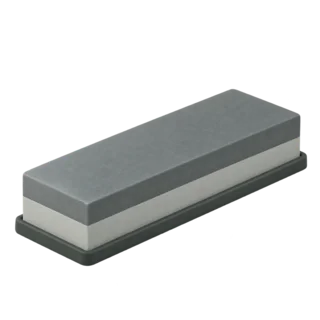
Bench whetstone
- Stone on a table, machete moves across it.
- Use the coarse face, then the fine face.
- Good at home; awkward with a long blade.
Wet the stone first: water for water stones, a few drops of honing oil for oil stones. Keep the same angle you used with the file and work the full length, tip included. On the fine face, a few light alternating strokes per side take off the burr. A machete does not need anything finer: a slightly toothy edge bites better into grass and vines.
Sharpening a machete with a grinder or belt sander
Power tools save time on badly chipped blades, but they ruin a blade more easily than hand tools. A grinding wheel spins fast and heats the thin edge in seconds. If the edge turns blue, the steel has lost its temper. That part stays soft until you grind it away.
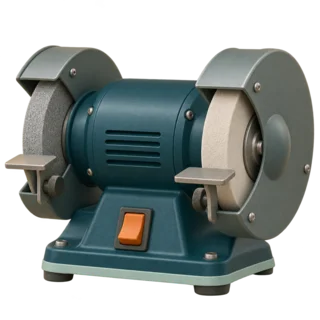
Bench grinder
Only for reshaping a damaged edge. Light touch, keep the blade moving, dip it in water after every pass.
Use the guards and wear safety glasses.
Belt sander
Runs cooler than a wheel and leaves a slightly convex edge. Edge trailing the belt, never pointing into it.
A medium belt, then a fine one.
An angle grinder or a Dremel can work too, but they are hard to keep at a constant angle on a long blade. Keep a cup of water within reach, use light pressure, and finish with a file or stone. If you only sharpen a machete a few times a year, the file is quicker overall. We would keep the grinder for one job: reshaping a badly chipped edge.
How to sharpen a machete without a file
Out on the trail, or with no tools at home, you can still bring back a usable edge.
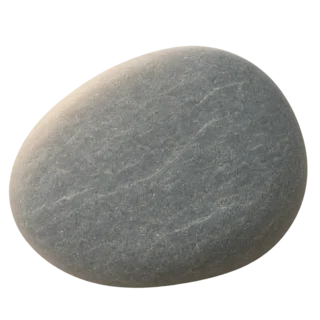
A smooth river rock
Fine-grained, flat stones work like a coarse whetstone. Wet it, then move it along the edge at your usual angle.
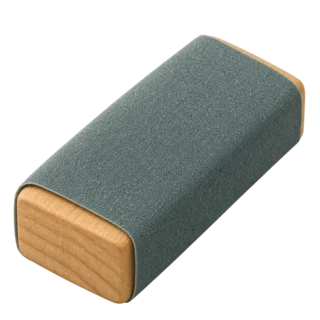
Sandpaper on a block
Wrap medium-grit paper around a flat piece of wood and treat it like a file, then finish on finer paper.
What about a knife sharpener? A pull-through model is usually too short for the blade and set at a thinner kitchen angle, so it gives an uneven edge. A handheld field sharpener or a carbide tool made for axes and machetes is a better choice.
Sharpening a rusty, new or dull machete
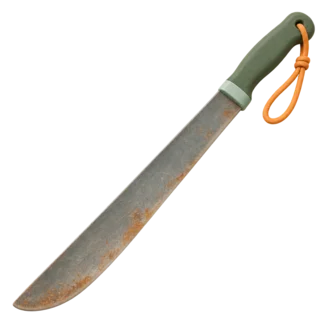
Rusty machete
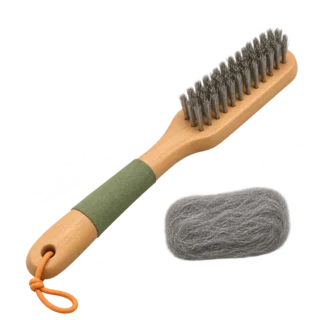
Scrub the blade with a wire brush or steel wool and a little oil, wipe it clean, then sharpen. Deep pits along the edge disappear only after more filing.
Brand new machete
Many budget machetes ship with a dull factory edge. Expect a longer first session to file a full bevel on both sides.
Dull but sound
If the edge just looks rounded and shiny, skip the file and use only the stone.
Curved, bolo and kukri machetes
On a curved blade, the belly bends away from a straight file. Use shorter strokes and swing the file along the curve, or switch to a puck stone held in your hand. On a kukri, the notch near the handle is not part of the edge: leave it alone. Steel thickness decides the angle: a thick bolo or kukri takes 25 to 30 degrees, a thin Latin-pattern blade 20 to 25.
How sharp should a machete be?
Sharp enough to slice clean through a sheet of paper held in the air, and to cut grass without folding it over. It does not need to shave hair. Five checks before you put it away:
Keep the edge longer
Dirt kills edges. A machete loses its edge fastest by hitting soil, rocks and wire. Cut a little above the ground, and look before you swing into thick growth. Give the edge a few stone strokes after each work session, before it gets really dull. Store it dry, lightly oiled and in a sheath. Leather holds moisture against the steel, so a canvas or plastic sheath suits for a blade that gets wet often.
Machete sharpening questions
What is the best way to sharpen a machete?
For most people, a mill bastard file with the blade clamped, followed by a few strokes on a stone. It is fast, cheap, and cannot overheat the steel.
What angle do you sharpen a machete at?
There is no standard. A common range is 20 to 25 degrees per side for grass and vines, and 25 to 30 degrees for woody stems or a blade that chips. Kitchen knife angles are too thin for a machete.
Can you sharpen a machete with a knife sharpener?
A pull-through kitchen sharpener is too short and too thin in angle for a machete. A handheld field sharpener made for axes and machetes works better.
How long does it take to sharpen a machete?
A touch-up on a stone takes a few minutes. Filing a full new bevel on a brand new machete, or repairing big chips, takes much longer, so plan an unhurried session.
Can you sharpen a machete with a grinder?
Yes, but keep it cool. Use light passes and dip the blade in water often. If the edge turns blue, that steel has lost its hardness.
Is 600 grit sharp enough for a machete?
For a machete, yes. A fine stone around 600 to 1,000 grit is enough for cutting vegetation; finer polishing adds little.
How do you sharpen a machete with a rock?
Pick a flat, fine-grained river stone, wet it and rub it along the edge at your usual angle, then turn the blade over. It works as an emergency touch-up.
How do you sharpen a rusty machete?
Clean off the rust first with a wire brush or steel wool and some oil, then file and hone as normal. Oil the blade before storing it.
Ready to plan a trip? Find a route and check its rules before you pack a cutting tool.