
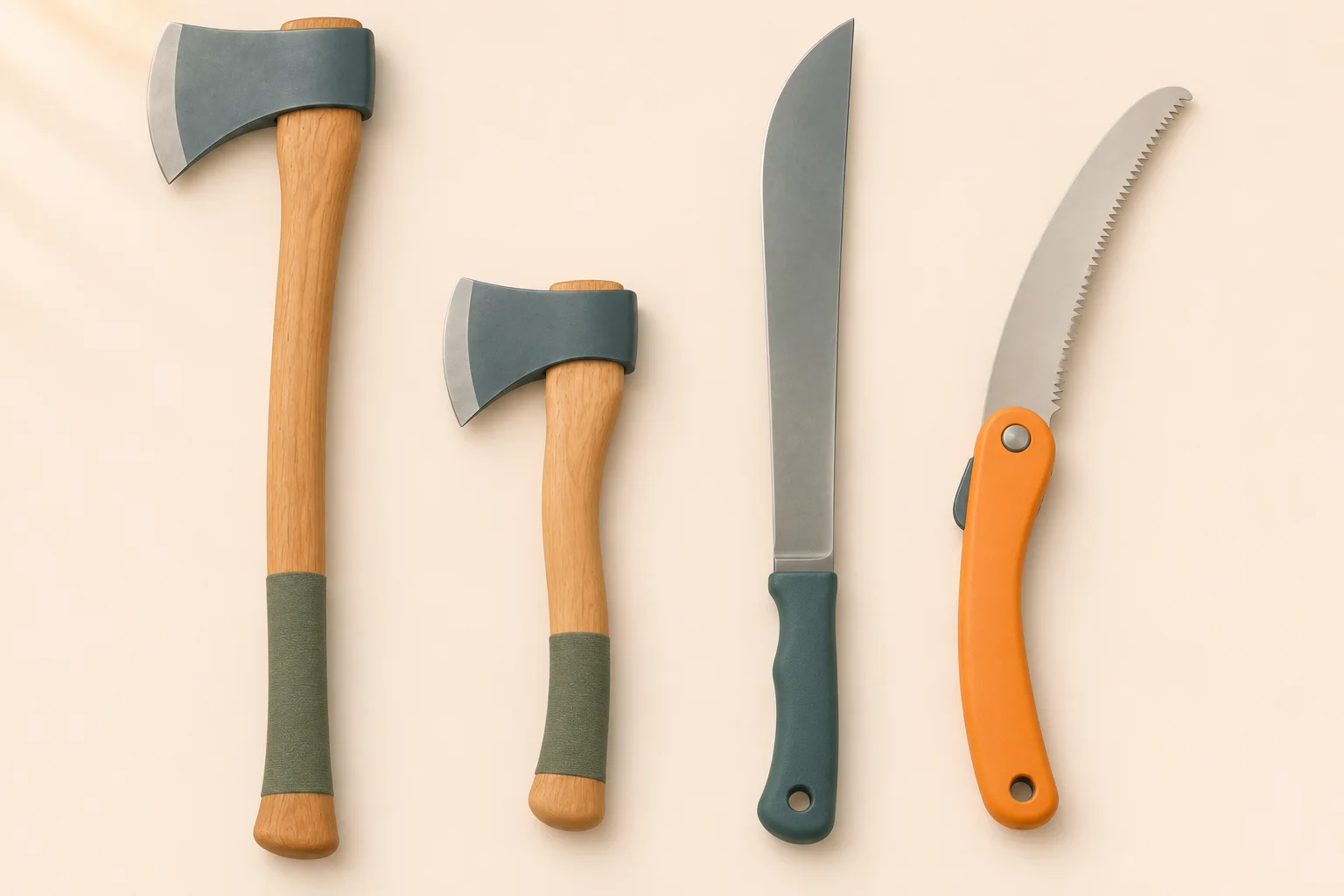
Which cutting tool for which job
Start with the job, then pick the tool. Most camp cutting is one of four tasks: making kindling, splitting short logs, cutting fallen dead branches to length where gathering is allowed, or clearing soft green growth. Each tool below is good at one or two of them and poor at the rest.
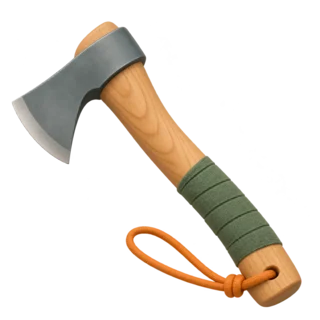
Hatchet
A small axe swung with one hand. Splits kindling and small pieces at a chopping block, and drives tent stakes with the back of the head.
Weak point: the short swing ends close to your legs.
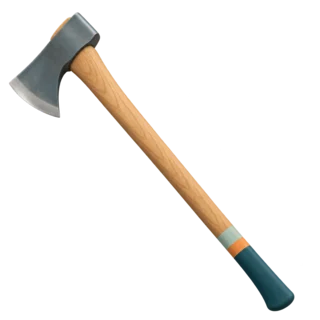
Axe
A heavier head on a long handle, swung with both hands. Splits firewood rounds and, in trained hands, fells and limbs trees.
Weak point: weight and a large clear zone.
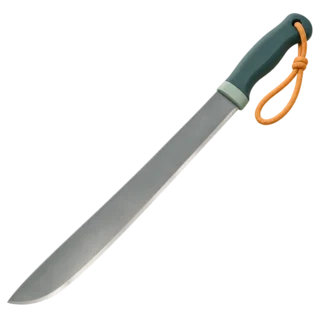
Machete
A long, thin blade for slicing grass, vines, cane and other soft green growth.
Weak point: bounces off dry hardwood and does not split.
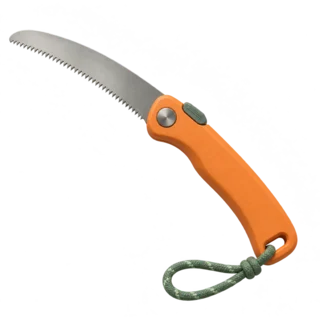
Folding saw
Cuts dead branches and small logs to length with short, controlled strokes. Light and quiet.
Weak point: it cuts across the grain but cannot split.
Kindling from split firewood: hatchet at a chopping block.
Splitting rounds of firewood: splitting axe or maul.
Dead branches cut to fire length: folding saw or bow saw.
Soft brush on land where cutting is allowed: machete.
Hatchet vs axe: the difference
The difference between a hatchet and an axe is mostly handle length and the grip it allows. A hatchet is short enough to hold in one hand. Council Tool, a US axe maker, describes its hatchet as a “one-handed camp axe” for light splitting, chopping and driving tent pegs. An axe has a heavier head on a handle long enough for two hands, so each swing carries far more energy.
Hatchet
- One hand on the handle; the other sets the piece, then moves clear.
- Fits on or inside a pack.
- Good for kindling, small pieces and stakes.
- Work kneeling at a chopping block.
Axe
- Both hands, standing, with a long swing.
- Heavy to carry far from the car.
- Good for splitting rounds and felling.
- Needs a wide clear zone around you.
Because the hatchet’s arc is short, a glancing blow comes back toward your knee or shin. So the Rocky Mountain National Park crew guide for axe and hatchet use has hatchet users kneel behind a chopping block. It also says never to chop on the ground.
Hatchet vs axe size
There is no single legal or industry size line between the two. Makers sell a ladder of sizes, and the names overlap:
Hatchet or hand axe. One-handed, the shortest handle. Light camp work.
Camp axe or small forest axe. Longer handle, still packable. Gränsfors Bruk says its Small Forest Axe is “still small enough to fit into a rucksack.”
Felling axe. Full length for two hands. Gränsfors sells its American Felling Axe with 81 or 90 cm handles, about 32 or 35 inches.
Splitting axe and maul. A wedge-shaped head built to push wood apart along the grain.
Compare the actual handle length and head weight on the product page; names like “camp axe” and “boy’s axe” are not standard sizes. A longer handle gives more power per swing, but only helps if you can control it and the follow-through misses your legs.
Hatchet vs axe for camping
For a lot of camping, you may not need either. Leave No Trace asks campers to burn dead and down wood “no larger than the diameter of an adult wrist that can be broken with your hands.” It also asks you to avoid cutting or breaking branches from standing or downed trees. Wood that size needs no tool.
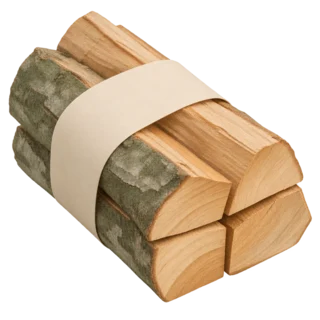
Campground with bought firewood
A hatchet is enough to split the bundle into kindling.
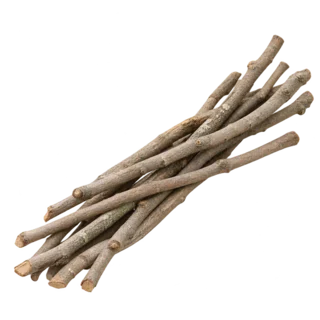
Backpacking
Where fires are allowed, gather small dead wood by hand. A folding saw weighs less than most hatchets if you want one tool.
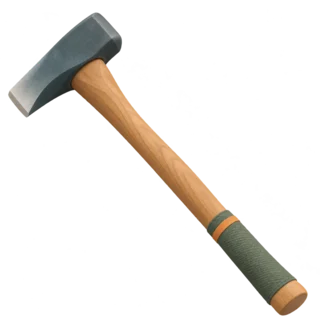
Cabin or home woodpile
Use a full axe or maul for big rounds, and keep the hatchet for kindling.
Buy firewood where you burn it. Firewood can carry invasive insects and diseases. Don’t Move Firewood gives a rough rule: “50 miles is too far, and 10 miles or less is best,” and many states set their own limits. Packaged wood with a USDA or state heat-treatment seal is generally considered safe to move; “kiln-dried” alone is not the same thing.
Our pick for most car camping is a folding saw plus a small hatchet: the saw cuts bought or gathered wood to length, the hatchet splits it. For backpacking we would leave the hatchet at home.
Splitting axe, maul or hatchet for firewood
Splitting is a different job from chopping. A felling axe has a thinner head that cuts across the grain. A splitting axe or maul has a fat, wedge-shaped head that drives into the end of a round and pushes the fibers apart. A maul is the heavier of the two.
A hatchet splits only small pieces into kindling. The same crew guide describes the safe way: start the blade lightly in the piece, take your holding hand away, then swing the hatchet and wood together down onto the splitting block. Keep the striking face square to the wood to prevent glancing blows.
Machete vs hatchet and machete vs axe
A machete has a long, thin, flexible blade. It slices soft green growth such as grass, vines, cane and brush, which is why it is a farm and tropical tool. On dry hardwood it bounces or sticks, and its thin edge chips. A hatchet or axe has a thick wedge behind the edge, so it bites into wood and splits it.
Machete
- Soft, green vegetation.
- Long reach, light for its length.
- Poor on dry wood; does not split.
Hatchet
- Dry wood and kindling.
- Short and compact.
- Poor for clearing long grass and vines.
A machete and an axe rarely compete, since they do different jobs. If you are walking marked trails in a US park, you need neither. The National Park Service rule 36 CFR 2.1 prohibits destroying, injuring or removing plants from their natural state. On national forests, 36 CFR 261.10 prohibits building a trail without authorization.
Kukri vs machete
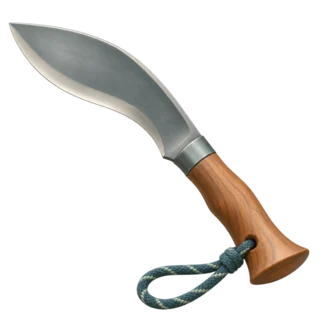
Kukri
A Nepalese knife with a heavy blade that angles forward. The weight sits near the tip, so it chops wood better than a thin machete, with less reach.
Straight machete
Longer and lighter. Better for sweeping cuts through grass and soft stems; weaker on wood.
Many products sold as a “kukri machete” are a machete with a kukri-shaped blade. Check the blade thickness and weight: a thin, light blade will still behave like a machete.
Saw vs hatchet
A saw cuts across the grain with little force and a small swing zone, so it is the calmer tool when you are tired or working in the dark. It turns a dead branch into fire-length pieces without splinters flying. It cannot split, so you still need a hatchet or a baton to open thicker pieces.
Folding saw
The blade folds into the handle, so it packs safely. Best on branches you can hold steady with your other hand.
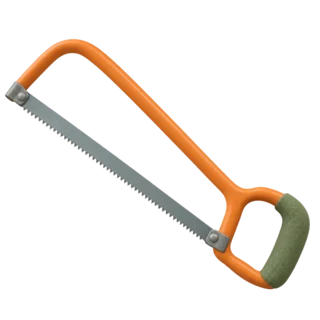
Bow saw
A frame keeps a long blade tight. Faster on logs at a car camp or cabin; bulky in a pack.
In designated wilderness, federal law bars motorized equipment, including chainsaws, apart from administrative and emergency exceptions (16 U.S.C. 1133(c)). Trail crews there work with crosscut saws and axes.
Safe use: clear zone, stance and carrying
These steps follow the Rocky Mountain National Park job hazard analysis for axe and hatchet use, written for park crews.
Inspect the tool. The handle is clean, with no cracks or splits, and the head is tight. A sharp edge glances less than a dull one.
Clear a circle around you. Remove bushes and overhanging branches within one arm length plus three tool lengths. Clear bark and limbs from under your feet. Wood chips can fly more than 20 feet.
Wear protection. Eye protection, leather or cut-resistant boots, leather gloves and long sleeves.
Use a chopping block. Never chop on the ground. Place the wood across the block and strike where the block supports it.
Swing away from your body. Make sure the follow-through is not in line with your legs or feet. With a hatchet, kneel or crouch behind the block.
Sheath it between jobs. Carry the tool by the handle just behind the head, blade down and away from you, in the downhill hand on slopes. Never on your shoulder.
Stop when you are tired. Fatigue is when swings start to wander. Warn anyone nearby before you swing, and keep children out of the clear zone.
Before you swing: quick check
What you may cut on public land
Check the rules before you pack a cutting tool. In national parks, 36 CFR 2.1 prohibits using or possessing wood gathered in the park, unless the superintendent designates areas where dead wood on the ground may be collected for campfires. On national forests, 36 CFR 261.6 prohibits cutting or damaging any tree or forest product without authorization, such as a permit.
Leave standing trees alone
Leave No Trace asks you to leave standing trees intact, dead or alive: they are home to birds and insects.
Bring or buy local wood
Use campground wood or a local seller. Gather only where the land manager allows it.
Do not clear new paths
Stay on existing trails. Cutting plants or building a trail without permission is prohibited in parks and national forests.
Fire restrictions can ban campfires entirely during dry periods, which makes a cutting tool dead weight. Check the park or forest alerts page before you go.
Cutting tool guides
This page is the overview. Each guide below covers one tool or skill in depth.
- What is a machete used forSafe use, carrying and the law.
- How to chop woodSplitting firewood with an axe.
- How to sharpen an axeFile and stone for axe and hatchet.
- How to sharpen a macheteFile, stone and angle.
- Chainsaw safety basicsGear and safe cutting.Coming soon
Hatchet vs axe questions
What is the difference between a hatchet and an axe?
A hatchet is a small axe used with one hand; an axe has a longer handle for two hands and a heavier head. The hatchet suits kindling and light camp work, the axe splitting rounds and felling.
Do I need an axe for camping?
Usually not. At a campground you can split bought firewood with a hatchet, and Leave No Trace recommends wrist-thick dead wood you can break by hand. A full axe makes sense at a cabin or home woodpile.
Which is better for camping, a saw or a hatchet?
For cutting wood to length, a saw: it is lighter, quieter and has a much smaller swing zone. For splitting, a hatchet. We would pack a folding saw first, and add a small hatchet when you burn bought firewood.
Can you cut a tree with a hatchet?
A small one, slowly, but on most public land you may not. National forests prohibit cutting trees without authorization (36 CFR 261.6), and national parks protect all plants (36 CFR 2.1).
How long should a camp axe be?
There is no standard length. Pick a handle you can control with two hands, short enough to pack, and check that the follow-through misses your legs. If it only fits one hand, it is a hatchet.
Is a hatchet good for survival?
It helps with fire in wet weather, because splitting exposes dry wood inside. It does not replace the basics: a map, warm layers, water and a way to call for help matter more.
Hatchet vs axe vs tomahawk: what is the difference?
A tomahawk is a light, thin-headed hatchet on a straight handle, often used for throwing. It chops less well than a camp hatchet of similar size, and splits poorly.
Is a kukri a machete?
No. A kukri is a Nepalese knife with a heavy, forward-angled blade. Some makers sell kukri-shaped machetes, which are lighter and thinner than a traditional kukri.
Can I legally carry a hatchet?
There is no single US rule. Carry laws are set by states and cities. When you travel, keep it sheathed and packed with your camping gear, and check state and local law for where you are going.
Ready to plan a trip? Find a route with a campsite and check its fire rules before you pack.