
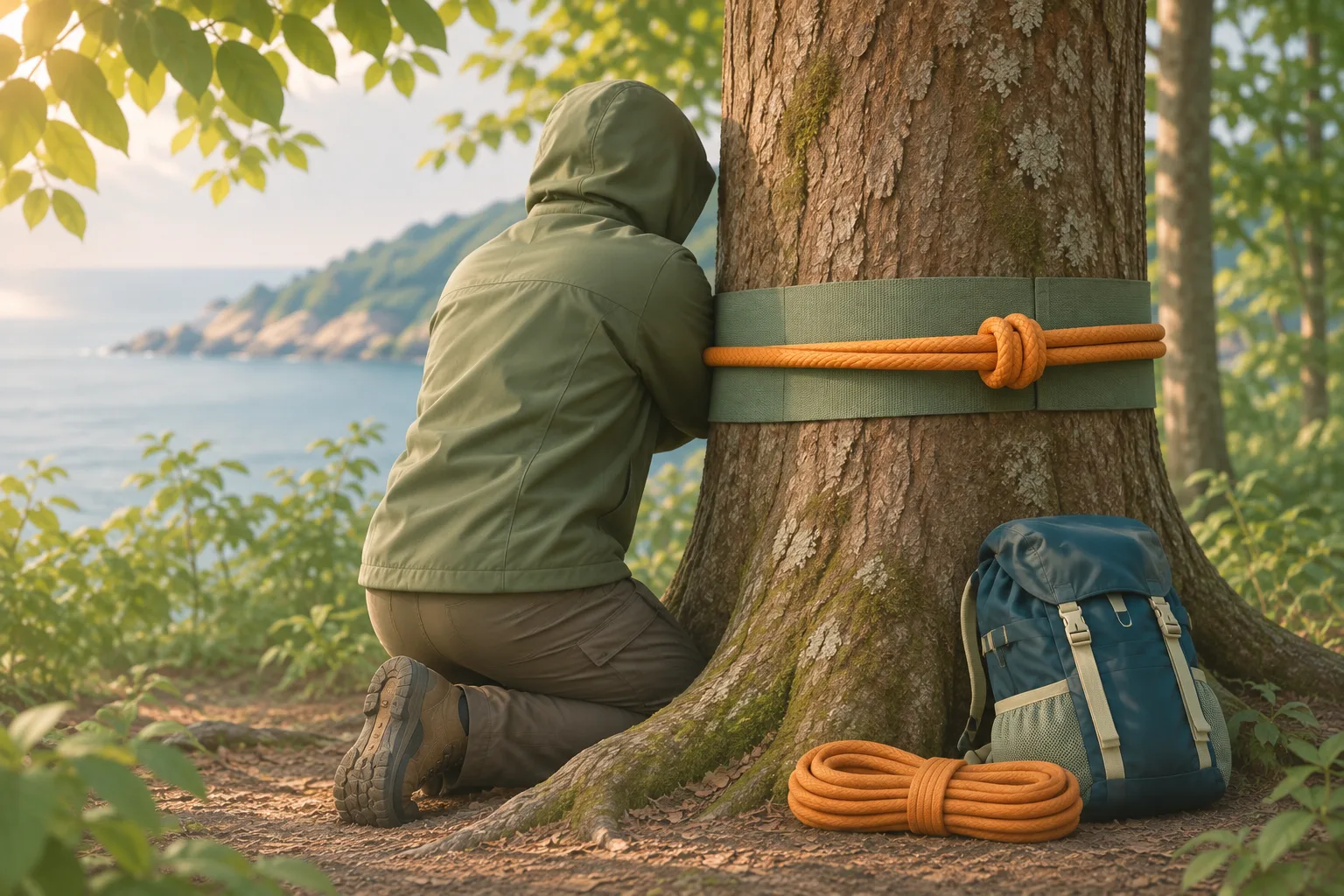
How to tie a rope to a tree in 4 steps
Most of the time you tie a rope to a tree for a few hours: a tarp ridgeline, a clothesline at camp, a line to hang a food bag. Start with the tree and what sits between the rope and the bark; the knot comes last.
Choose the tree. A healthy, living trunk at least as thick as your thigh. Avoid dead trees, trees with dead branches overhead and roots at a crumbling edge.
Protect the bark. Wrap a wide tree strap around the trunk, or slide a pad or a piece of hose under the rope where it touches bark.
Tie the knot for the job. A tie-off, a loop or a heavy anchor each has its own knot, shown below.
Check it and take it down. Pull hard on the rope before you trust it, and untie everything when you leave.
Best knot to tie a rope to a tree
There is no single best knot. It depends on whether you need to adjust the rope, hang a loop on it or put a heavy pull on it. These are the knots and gear we recommend for a trunk.
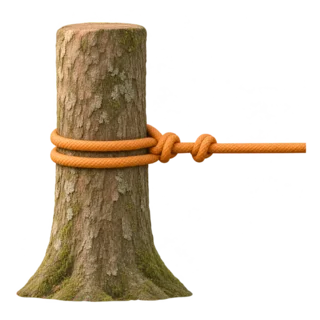
Round turn and two half hitches
The everyday tie-off. Holds a strong pull and unties easily.
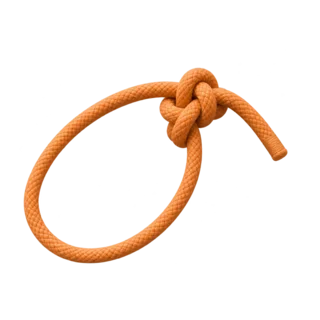
Bowline
A fixed loop around the trunk or strap. Back it up with an overhand in the tail.
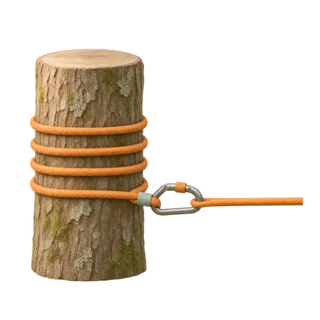
Tensionless hitch
Four or five wraps and a carabiner. Friction does the holding, so it suits heavy pulls.
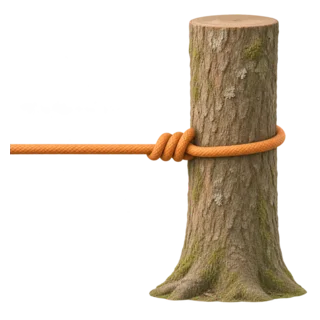
Timber hitch
Quick wraps for towing a log. It needs a steady pull to stay put.
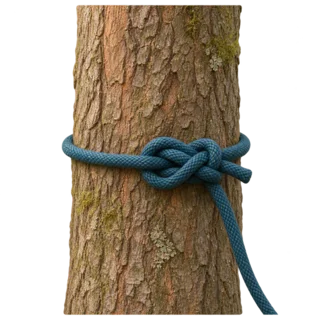
Figure 8 follow through
A secure loop that will not loosen when the rope goes slack. Our hub guide shows it on a hand-line anchor.
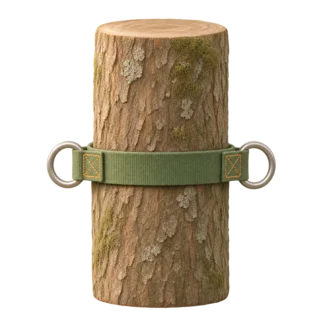
Tree strap
Wide webbing around the trunk; clip or tie the rope to its ring.
How to tie a round turn and two half hitches
This is the knot to reach for first. The round turn takes the load while you finish tying, and the half hitches lock it.
Two wraps around the trunk. Pass the end around the tree twice, over the strap or pad. Hold the standing rope tight.
First half hitch. Bring the end around the standing rope and tuck it through the gap.
Second half hitch, same way. Repeat in the same direction and snug both hitches against each other.
Bowline around a tree
A bowline makes a loop that will not shrink and unties easily after a hard pull. Tie it with the loop around the trunk, or through the ring of a tree strap.
Small loop in the standing rope. Leave enough rope past it to go around the tree.
Around the tree and back. Take the end around the trunk, then up through the small loop.
Behind and back down. Pass it behind the standing rope and down through the small loop again. Hold the tail and the loop together and pull the standing rope to set it.
Add a backup. A bowline can work loose when the rope flaps slack. Tie an overhand with the tail around the neighbouring leg of the loop.
Tensionless hitch
In a tensionless hitch the rope wraps around the trunk several times, and friction on the bark holds the load, so the end clipped back sees almost no pull.
Wrap four or five times. Neat, parallel wraps around a thick trunk, over a pad if the bark is thin.
Clip the end back. The load hangs on the standing rope. Tie a figure 8 loop in the free end and clip it back to the standing rope with a locking carabiner.
Load it slowly. The wraps tighten and grip. To untie, unload the rope and unwind it.
Timber hitch
Wrap the end around the trunk, around its own standing part, then twist it around its own wrapped part at least three times. Animated Knots lists it for towing logs. It stays tight only while it is pulled, so it is a poor choice for a line that will go slack overnight.
Protect the tree: why a tight rope hurts it
Under the bark sits a thin living layer that carries water and food up and down the trunk. A thin rope pulled tight crushes and rubs it, and a rope or wire left in place for months can girdle the tree as it grows. A tree saver strap or pad spreads the load over a wide area of bark. University of Maryland Extension advises against thin rope on trees for this reason.
Some parks go further. Redwood National Park bans hammocks and ropes on trees, Rock Creek Park bans tying anything to trees, and the C&O Canal says not to tie ropes to trees. Check the rules before you tie anywhere.
Tree saver strap
Flat webbing, wide and soft, with a ring or loop at each end.
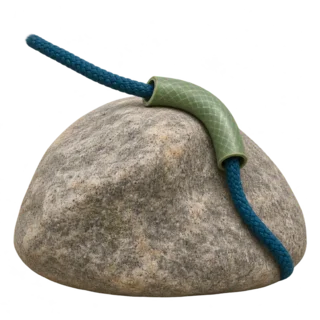
Pad or hose
An old foam pad, a towel or a split length of garden hose under the rope.
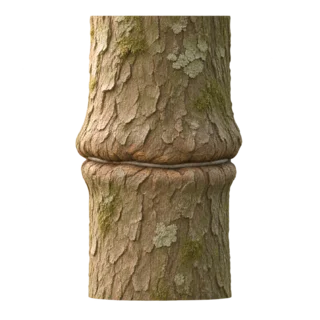
What not to leave
Rope or wire tight around a trunk for months grows into the bark.
Do
- Wide strap or pad between rope and bark
- One snug wrap, never cinched hard
- Thick, healthy trunk
- Take it all down when you leave
Do not
- Bare thin cord pulled tight on bark
- Nails, screws or staples in a tree
- Dead trees or trees with dead limbs above
- Rope left on a tree for months
How to tie a rope between two trees
For a tarp ridgeline or a clothesline between two trees, use one fixed knot and one you can tension.
First tree: bowline. Over a strap or pad, at the height you want the line.
Second tree: trucker’s hitch. Tie a small fixed loop in the line an arm’s length from the tree. Take the end around the trunk, back through the loop, pull toward the tree, then lock it with two half hitches.
Check the sag. Taut enough that a tarp sheds rain instead of pooling it, but not bar-tight against the bark.
Hammock: use tree straps
To hang a hammock, use tree straps rather than rope on the trunk. Leave No Trace asks for webbing at least 1 inch wide around trees at least 6 inches thick, wrapped once, with no knots on the tree. Tie or clip the hammock to the straps.
How to tie a rope to a tree branch
To get a rope over a high branch, tie a light cord to a small throw bag or a sock with a stone in it and toss it over. Pull the rope up with the cord, then tie off at the trunk with a round turn and two half hitches. A thin branch flexes and can snap, so choose a limb close to the trunk and thicker than your arm.
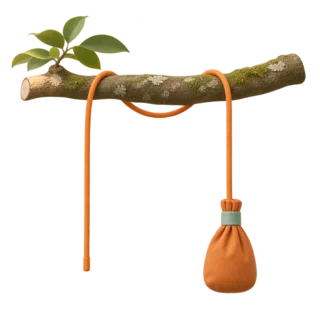
Over the limb
Throw a weighted cord over, then haul the rope after it.
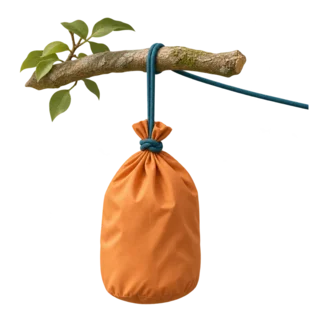
Hanging a bag
Rope over the limb, bag on a bowline, other end tied off at the trunk. In bear country, follow the park’s food storage rule.
Tree swing: a job for hardware
A swing carries a person, so it needs more than a camp knot. Davey Tree’s arborists suggest a branch at least 8 inches thick and a rubber tube over the rope where it touches bark. Eye bolts avoid the rope rubbing but leave wounds that can let infection in. If a child will swing on it, have an arborist look at the tree first.
Do not hang people from camp rope. Cord, paracord and an untested branch are fine for a tarp. A swing or a climb needs rated gear and a sound tree.
Rope and tree questions
What is the best knot to tie a rope to a tree?
For most jobs, a round turn and two half hitches. Use a bowline when you need a loop and a tensionless hitch for heavy pulls.
Will tying a rope around a tree kill it?
A rope for a night on a strap or pad is unlikely to. A tight rope or wire left for months can cut into the bark and girdle the tree, which can kill it.
How do you tie a rope around a tree tight?
Tie one end with a bowline and tension the other with a trucker’s hitch, then lock it with half hitches.
What is a tree saver strap?
A wide, flat strap that wraps around the trunk so the rope pulls on the strap, not on the bark.
How do you tie a rope to a high tree branch?
Toss a weighted cord over the branch, use it to pull the rope over, and tie the rope off at the trunk.
What is a constrictor knot used for?
Binding: it clamps tight around a bundle or a rope end and is hard to untie. It is not a good way to tie a load to a tree.
What is the difference between a knot and a hitch?
A hitch ties a rope to an object, such as a tree or post, and usually falls apart when the object is removed. A knot holds its shape on its own.
Ready for camp? Find a route with a good campsite and practice these on the first evening.