
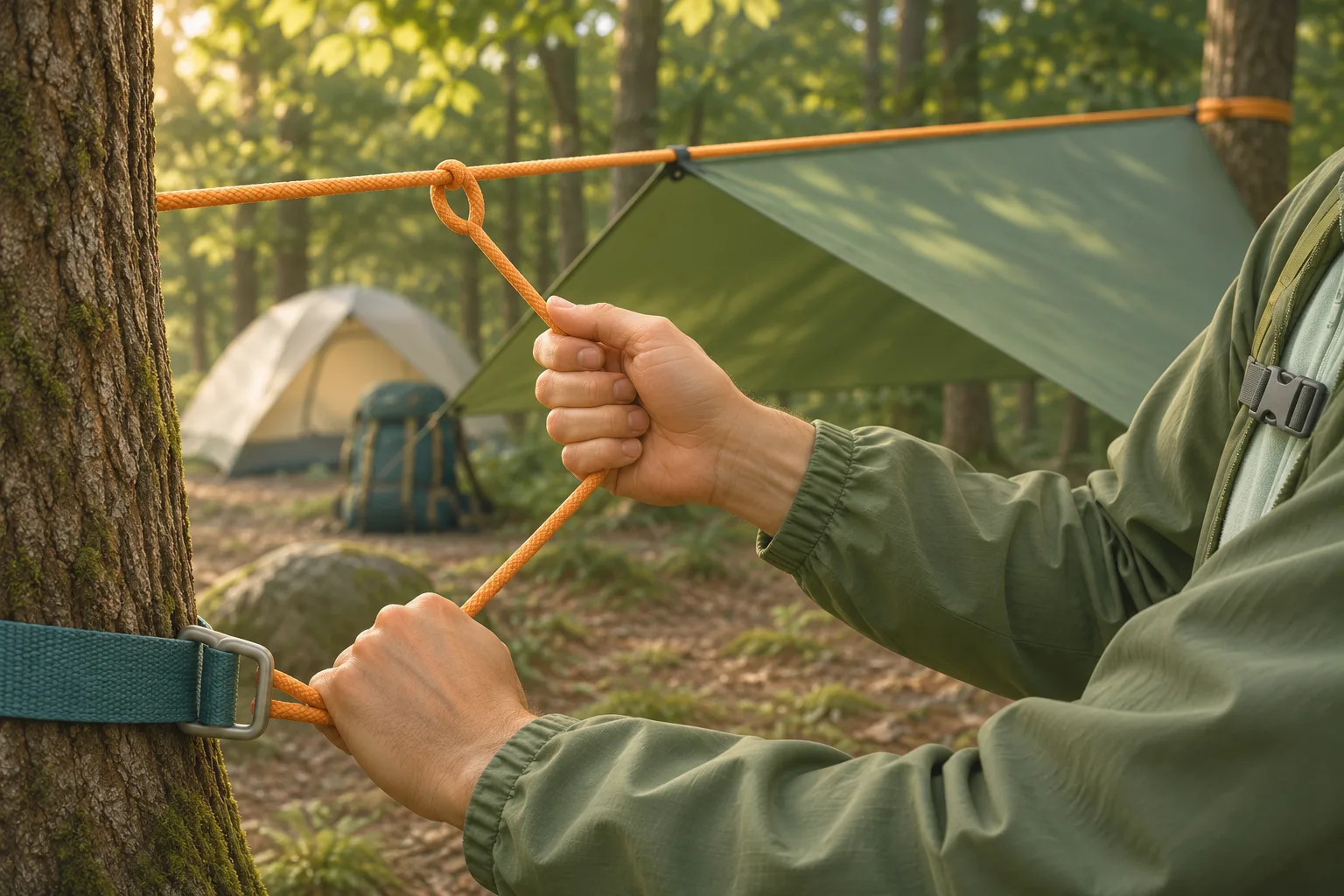
How to tie a trucker's hitch
Here it is on a tarp ridgeline between two trees, step by step. One end is tied off for good; the other end does the pulling through a loop you tie in the middle of the line.
Tie one end to the first tree. Use a bowline or a round turn and two half hitches. This end stays put; all the adjusting happens at the other tree.
Run the rope toward the second tree. Lay it past the second tree and hang the tarp on it now if it goes on the line. Keep the rope slack.
Tie a loop in the standing part. About an arm’s length from the second tree, tie a small loop in the line itself. The section below on loops shows which ones work.
Go around the tree and back. Pass the free end around the second tree, bring it back to the loop and thread it through.
Pull the end back. Pull the free end back toward the second tree. At 3:1 in theory, you pull about three feet of rope for every foot the line tightens, and that is where the extra force comes from.
Pinch and tie off. Pinch the rope where it runs through the loop to hold the tension, then tie two half hitches around the two strands that run from the loop to the tree.
If the loop ends up against the tree before the line is tight, untie it and tie it farther back. The same steps work on a tent guyline, where the stake takes the place of the second tree, and on a tie-down, where the hook or rack bar does.
No hook needed. The hitch works around anything you can pass the rope around: a tree, a stake, a rack bar, a tarp grommet with a short loop of cord through it.
Which loop to use
The loop is the part that varies most. It has to hold under load and come undone afterwards, and the rope rubs through it every time you pull. A loop that can be shaken out works for a quick job; for a line that stays up for days, use a fixed loop.
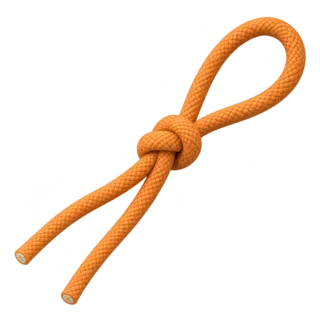
Slip knot loop
Fastest to tie and unties with one pull. It can capsize under a heavy load, so keep it for light, short jobs.
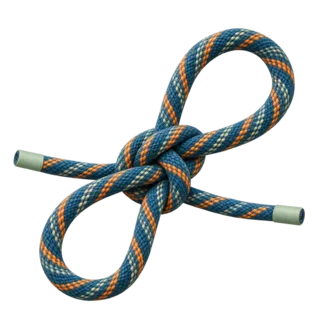
Directional figure 8
A fixed loop that will not slip. After a heavy load it can be hard to untie.
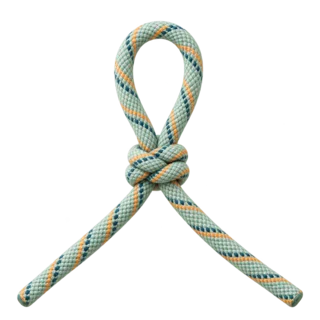
Alpine butterfly
A fixed loop that takes load in any direction and still unties easily. Our pick for a ridgeline.
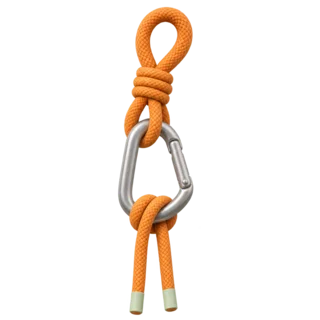
Loop plus a carabiner
Clip a carabiner into the loop and run the rope through it. Less friction, less wear on the loop.
A bowline tied on a bight also makes a loop in the middle of a line, but it takes longer to tie than the butterfly. Whichever loop you use, the rope rubbing through it wears both strands. On paracord or a thin guyline the carabiner is worth its few grams.
How to tie off a trucker's hitch
When you let go, the tension tries to pull the rope back through the loop. Pinch the two strands that run from the loop to the anchor together, right at the loop, and tie off with your other hand. Two half hitches around those two strands hold it. If the line creeps back while you tie, wrap the free end once around them first and hold that turn with your thumb.
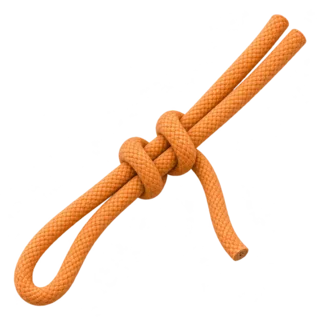
Two half hitches
Pass the free end around the two strands and through itself, then repeat. Under a heavy load they can jam.
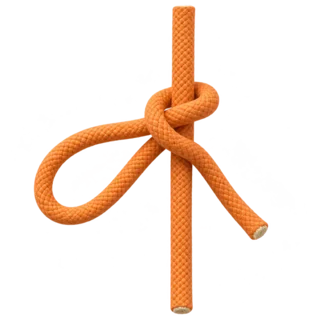
Slipped half hitch
Push a bight through instead of the end. A pull on the free end lets the whole line go.
Quick release trucker's hitch
For a tarp you will strike in the morning, finish with a slipped half hitch: a bight of the free end pushed through the half hitch instead of the end itself. Pull the free end and it falls open, so the line goes slack at once; keep your face clear. For a windy night, use plain half hitches and accept a little more untying in the morning. A slip knot loop plus a slipped finish makes the whole hitch come apart with two pulls, with no knots to pick out of cold, wet cord.
Trucker's hitch for a tarp ridgeline and guylines
At camp the hitch is used for any line that has to be tight and stay tight. We use it for the ridgeline under a tarp, and a short version on the windward guylines.
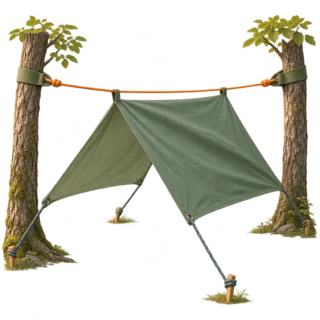
Tarp ridgeline
Tighten the line first, then pitch the tarp over it. A drum-tight ridgeline keeps the tarp from sagging in rain.
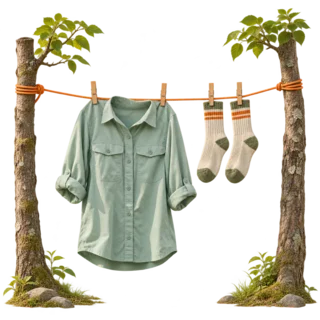
Clothesline
A paracord line between two trees that does not droop when wet clothes go on.
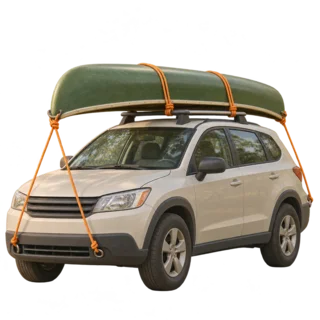
Canoe on a roof rack
Bow and stern lines to the car, each one pulled tight with the hitch and checked after the first miles.
For a hammock, use the hitch only for the tarp line above it. A hammock holds a person, and the suspension should be made for that load.
Around a tree: protect the bark
A thin cord pulled tight around a trunk cuts into the bark. Choose a healthy, solid tree, go around the trunk instead of a branch, and put a flat strap under the rope. Leave No Trace asks hammock campers for tree straps 3/4 inch to 1.5 inches wide; the same straps work for a ridgeline. Take the line down when you leave.
Is it really 3:1? Mechanical advantage and friction
On paper, yes. With the far anchor fixed, the rope through the loop gives a theoretical 3:1 mechanical advantage: pull with 20 pounds and the line could see about 60. Rope sliding over rope loses a lot of that to friction; Animated Knots estimates the real figure may be more like 1.6:1, or about 30 pounds. The friction has a useful side, though: it helps hold the tension while you tie off. A carabiner in the loop cuts the friction, and a real pulley comes close to the full 3:1.
That force is also why the hitch can damage gear. A tarp grommet, a cheap tent stake or a thin shock-cord loop can tear out long before the rope fails. Pull until the line stops sagging, then stop.
Double trucker's hitch
This version adds a second loop and a second pass, so the rope runs through two loops before it is tied off. Wikibooks gives it a theoretical 5:1, but every extra bend adds friction too. For camp lines a single hitch is plenty; the double belongs to heavy loads on trailers and boats.
Alternatives: taut-line hitch, clove hitch and ratchet strap
These come up as alternatives, but each one does a different job.
Taut-line hitch
A taut-line hitch is a sliding loop for a tent guyline. You tighten it by sliding the knot along the line, which is handy when nylon stretches in the rain. It cannot pull a line as tight as the loop-and-pull method.
Clove hitch
A clove hitch attaches a rope to a post or tree quickly. It is a way to fasten one end, with no pulling power of its own, and it can work loose when the load shifts.
Ratchet strap
A ratchet strap tensions a load with a lever and holds it, and needs no skill. The hitch needs only rope, which you already carry.
Why the hitch slips or fails
Most problems come from the loop or the tie-off, not the idea.
- The slip knot loop capsized under load. Use a fixed loop for anything that stays up overnight.
- The tie-off went around one strand only. Tie the half hitches around both strands that run to the anchor.
- The loop was tied too close to the anchor. With no room to pull, the line stays slack; retie it farther back.
- Slick, thin cord lets the half hitches creep. Add a third one.
Not for people. This hitch is for gear and loads. Do not use it to hold a person, for a fixed line on a slope or for climbing; those need proper equipment and training.
Questions and answers
What is a trucker’s hitch used for?
To pull a rope tight between two points and hold it: tarp ridgelines, clotheslines, guylines and tying down loads on a truck, trailer or roof rack.
Why use it instead of just pulling hard?
The loop in the line works as a simple pulley, so you can make a line much tighter than by pulling it by hand, and still untie it easily.
Is a trucker’s hitch a 3:1?
In theory it gives a 3:1 mechanical advantage. Rope rubbing on rope brings the real figure down to something like 1.6:1; a carabiner or pulley in the loop raises it.
How do you lock it off so it holds?
Pinch the strands just below the loop to hold the tension, then tie two half hitches around both strands. Use a slipped half hitch for a quick release.
Can you adjust it once it is tied?
Yes. Undo the half hitches, pull more or let some rope back through the loop, and tie off again.
What variants are there?
They differ mainly in the loop: slip knot, directional figure 8, alpine butterfly or bowline on a bight, with or without a carabiner. The double trucker’s hitch adds a second loop.
What else is it called?
It is also called the wagoner’s hitch, lorry hitch, harvester’s hitch and power cinch. In The Ashley Book of Knots it is number 2124.
What is the difference between a knot and a hitch?
A hitch ties a rope to something else, such as a tree, a post or a ring. A knot in the narrow sense is tied in the rope itself. This one combines both.
What do you use to hang a tarp?
A ridgeline of paracord or thin cord between two trees, tightened as shown above, plus guylines and stakes at the corners.
Pitch a tarp on your next trip Find a route with a camp and pack a length of cord for the ridgeline.