
Knots for camping: the 8 essential knots by job
Most camp rope work comes down to six jobs. You make a loop, grab a tree or pole, tension a line, adjust it, join two ropes and stop an end from slipping out. Eight essential knots cover those jobs. Many lists add more, but these are the ones we recommend learning before your first tarp or tent night.
Bowline
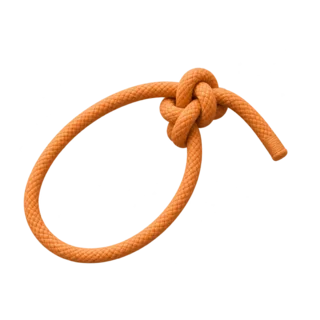
A fixed loop that does not slide. Use it around a tree, through a grommet or to hang a bag.
Taut-line hitch
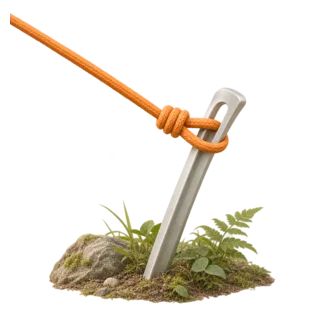
An adjustable loop. Slide it to tighten a guyline without retying.
Trucker’s hitch
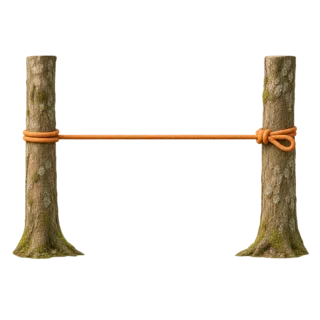
A rope pulley that pulls a ridgeline or clothesline really tight.
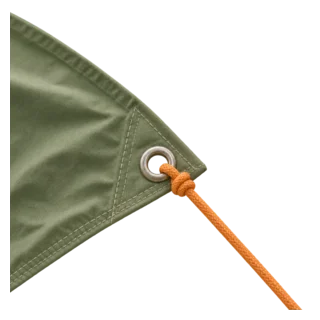
Two half hitches
The everyday tie-off to a tree, post, ring or tarp grommet.
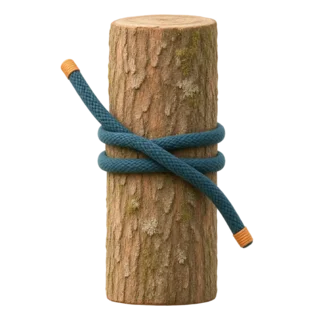
Clove hitch
Two quick wraps on a pole or stick. Fast, but back it up.
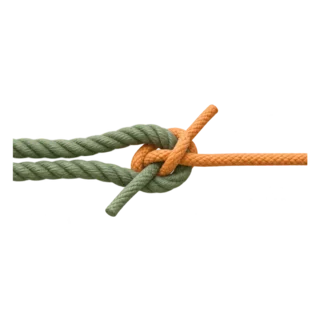
Sheet bend
Joins two ropes, even of different thickness.
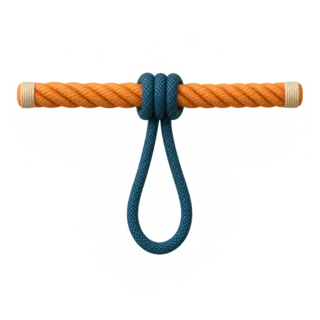
Prusik
A loop of thin cord that grips a thicker line when pulled and slides when slack.
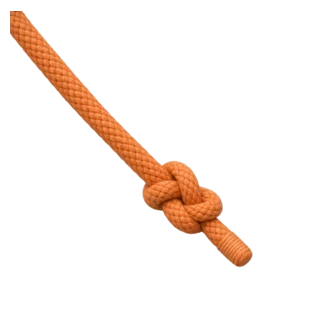
Figure 8
A bulky stopper at the end of a rope, so it cannot pull back through.
Learn them in this order. The first three plus a prusik will pitch a tarp; the rest fill in the odd jobs.
How to tie the essential camping knots
A few rope words make the steps easier. The working end is the end you tie with. The standing part is the rest of the rope. A bight is a U-shaped fold in the rope.
Bowline: a fixed loop
The bowline makes a loop that keeps its size under load and still unties easily after a hard pull. Use it to tie a ridgeline around the first tree, or to make a loop for a food bag.
Make a small loop in the standing part. The working end lies on top. Leave enough rope below it for the big loop you want.
Up through the small loop. Pass the working end up through it from underneath.
Around the back of the standing part. Take the end behind the standing part, then back down through the small loop.
Dress and set it. Hold the end and the side of the big loop together and pull the standing part. Leave a tail of a hand’s width or more.
A bowline can work loose when the line goes slack and flaps, in wind or after you take a tarp down. Tie a stopper knot in the tail or finish it with a half hitch around the loop.
Taut-line hitch: an adjustable guyline
The taut-line hitch holds by friction, so you can slide it up the line to tighten a tent guyline and it stays put when you let go. It is the classic tent knot.
Around the stake. Pass the working end around the stake or anchor and bring it back alongside the standing part.
Two turns inside the loop. Wrap the end twice around the standing part, working back toward the stake.
One turn outside. Bring the end past the two turns, away from the stake, and make one more turn around the standing part. Tuck it under itself.
Slide to tension. Push the knot away from the stake to tighten the line. Snug it up before you load it.
In slick cord such as Dyneema or polypropylene the hitch can creep. Add another turn inside the loop and finish with an extra half hitch if it slips.
Trucker’s hitch: a tight ridgeline
The trucker’s hitch turns the rope into a simple pulley, so you can pull a line far tighter than with your hands alone. It is the knot for a tarp ridgeline, a clothesline or a load strapped to a roof rack. On paper the pulley gives a 3:1 advantage; friction in the knot takes a good part of that away, but it is still far tighter than a hand pull.
Tie a fixed loop partway along the line. A slipped overhand or a directional figure 8, about an arm’s length from the anchor.
Around the anchor and back. Pass the working end around the second tree, then through the loop you tied.
Pull down to tension. The loop acts as a pulley. Pull until the line is as tight as you need, then pinch it at the loop.
Lock it off. Two half hitches around the line below the loop. A slipped half hitch lets you release it in one pull.
Two half hitches: tie off to a tree or grommet
This is the plain, quick way to fix a rope to anything: a tree, a post, a ring or a tarp grommet. Start with a full turn around the object first (a round turn and two half hitches) and it holds a heavier pull while you finish tying.
Around the object. Pass the working end around the tree or through the grommet. Take a second wrap for a round turn.
First half hitch. Bring the end around the standing part and tuck it through the gap you just made.
Second half hitch, same direction. Repeat. If the two hitches go the same way, they form a neat clove hitch on the standing part.
Clove hitch: a quick hold on a pole
The clove hitch is two wraps that pinch each other. It is the fastest way to tie a line to a trekking pole, a stick toggle or a post, and easy to adjust. On its own it can slip, especially in some cords or on a square post, so add a half hitch for anything that matters.
First wrap. Pass the rope around the pole and cross over the standing part.
Second wrap. Go around the pole again, beside the first wrap.
Tuck under the second wrap. Push the end under the wrap you just made. Both ends leave the knot in opposite directions between the two wraps.
Sheet bend: join two ropes
Too short a line? The sheet bend joins two ropes, and it works when one is thicker than the other. If the sizes are very different, take the thin end around the bight twice (a double sheet bend).
Make a bight in the thicker rope. Hold the U shape in one hand.
Up through the bight. Pass the end of the thinner rope up through the U from underneath.
Around both legs, then under itself. Wrap it around the back of both legs of the U, then tuck it under its own standing part, not under the bight.
Check the tails. Both short ends should finish on the same side of the knot. Pull all four parts to set it.
Prusik: a grip that slides on a line
A prusik is a loop of thinner cord wrapped around a thicker line. Slack, it slides. Pulled, it grips. On a tarp ridgeline, two prusiks let you slide the tarp along and tension it without retying.
Make a loop of thin cord. A short length, its ends joined with a double fisherman’s knot. It must be clearly thinner than the ridgeline; add a fourth wrap if it slips.
Wrap it through itself. Lay the loop behind the ridgeline and pass it around and through itself three times.
Dress it neat. Coils side by side, none crossing. Clip or tie the tarp corner to the hanging loop.
Figure 8: a stopper at the end
A figure 8 at the end of a rope is bulky enough that it will not pull through a grommet or a pulley, or let an end slip out of a hitch. It is also the base of the figure 8 loop used for anchors.
Make a loop near the end. Cross the working end over the standing part.
Around the back. Take the end behind the standing part.
Down through the loop. Pass it through the first loop from the front and pull tight. It looks like an 8.
Tarp knots: how to tie down a tarp with rope
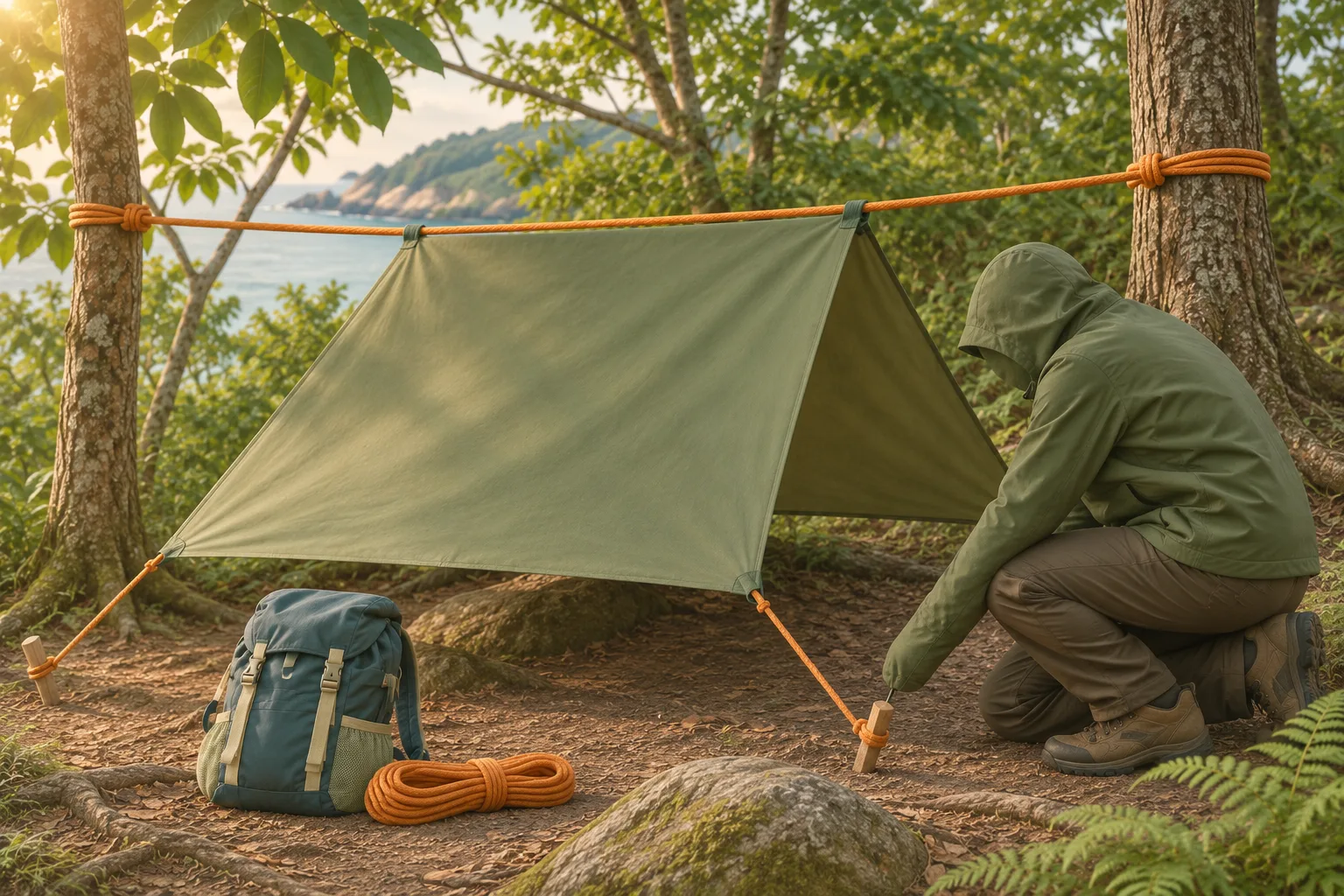
A tarp shelter needs a tight ridgeline and corners you can adjust. Four knots from the list do the whole job.
Ridgeline, first tree: bowline. Tie a bowline around the trunk at about chest height, over a pad or wide strap if the bark is thin.
Ridgeline, second tree: trucker’s hitch. Pull the line tight with a trucker’s hitch and lock it with a slipped half hitch.
Tarp on the ridgeline: prusiks. Clip or tie the tarp’s ridge grommets to two prusik loops and slide them out until the tarp is taut.
Corners: taut-line hitches to stakes. Tie a bowline or two half hitches at the grommet, run the guyline to a stake, and finish with a taut-line hitch so you can retension at night.
Slip the last tuck. Finish any hitch with the end folded into a bight before the last tuck. One pull on the tail undoes it in the morning, even with cold fingers.
Tent knots: guyline, tent stake and clothesline
Most tents come with sliders on the guylines, but cord breaks and sliders get lost. These are the jobs a camping trip asks of a short length of cord.
Tent stake knots
Taut-line hitch around the stake. In sand or snow, tie the line to the middle of a buried stick with a clove hitch backed up by two half hitches.
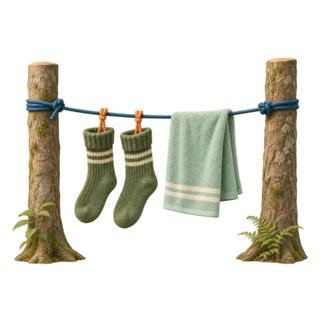
Clothesline
Bowline on one tree, trucker’s hitch on the other. A few twists in the line hold clothes without pegs.
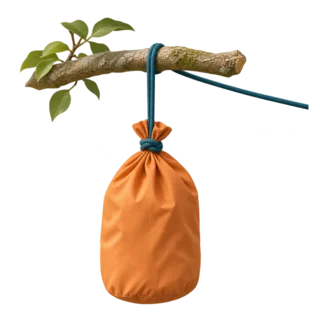
Food bag
Bowline on the bag, line over a branch, two half hitches on a tree. Yellowstone asks for 10 ft up and 4 ft out; Yosemite bans hanging and requires canisters. Check the park’s rule.
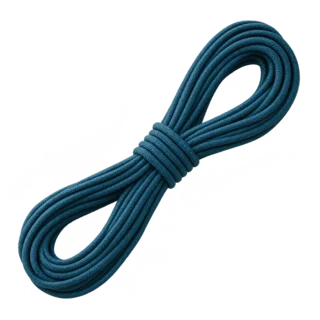
Spare cord
A hank of 50–65 ft (15–20 m) of thin cord replaces a broken guyline, a lost slider or a shoelace.
Hammock knots: use straps
For a hammock, skip the knot around the tree. Thin rope under a sleeping person’s weight squeezes and cuts the bark. Leave No Trace asks for webbing straps 1 inch or wider, wrapped once around a trunk at least 6 inches thick, with a loose hang and no knots on the tree. The hammock then clips to the strap with a carabiner, or ties on as its maker shows.
Straps first, knots second. Any knot in a hammock setup belongs between the strap and the hammock, not on the bark.
Hiking knots and backpacking cord
Hiking knots are the same knots for camping, tied in thinner cord. On a backpacking trip the rope is usually 3–4 mm accessory cord or paracord. Thin, slick cord grips less, so knots that hold by friction need an extra turn and a longer tail. Melt or tape the cut ends so they do not unravel; molten nylon sticks to skin, so let it cool before you touch it.
- 50–65 ft (15–20 m) of cord
- Two prusik loops
- Small knife
- Lighter to seal ends
Knots to avoid and when a knot can fail
Use
- Sheet bend to join two ropes
- Bowline with a stopper on the tail
- Round turn before half hitches on a hard pull
- A tail at least a hand’s width long
Avoid
- Square knot to join two ropes under load
- Granny knot: a square knot tied wrong
- A bowline left unloaded and untied-off
- Any camping knot to hold a person
The square (reef) knot is a binding knot: it closes a bundle, a bandage or a stuff sack. Pull one free end outward and it can capsize and slide apart. Clifford Ashley, author of the standard knot encyclopedia, wrote that it should never be tied as a bend, and that it has probably cost lives when people used it that way. Every knot also weakens a rope: rescue-rope tests by CMC put a bowline at 58–75% of the rope’s strength.
Camp knots are not for climbing. None of these knots, tied in camp cord, belongs in a system that holds a person: a hand line, a rappel or a swing. That needs rated rope, the right knots and training.
How to tie a good knot
A good knot is the right knot, tied neatly and pulled tight. Four habits make the difference between a knot that holds and one that slips.
Dress it. Straighten every strand so nothing crosses where it should lie side by side. A messy knot is a weaker knot.
Set it. Pull each strand, not just the ends, until the knot is firm.
Leave a tail. A hand’s width or more. A knot with a short tail can slip out.
Check it. Does it look like the picture? If you are not sure, untie it and start again.
A good routine: tie a new knot ten times at home, then with eyes closed, then around a chair leg as if it were a tree. Use the printable card below and tick each knot when you can tie it without looking.
Camping knots questions
What are the essential knots to know for camping?
Bowline, taut-line hitch, trucker’s hitch, two half hitches, clove hitch, sheet bend, prusik and figure 8. Together they make a loop, tie to trees and poles, tighten and adjust lines, join ropes and stop a rope end.
What are the 10 most useful knots?
Lists differ. For camp, add the square knot (for bundles only) and the slipped overhand, which ties the loop of a trucker’s hitch, to the eight above.
What is the best knot for a tarp?
There is no single one. Use a bowline and a trucker’s hitch for the ridgeline, prusiks to hold the tarp on it, and taut-line hitches on the corner guylines.
What knot do you use for tent stakes?
A taut-line hitch around the stake, so you can tighten the guyline later. A bowline also works if the line already has a slider.
How do you tie a strong knot to hang something?
Tie a bowline around the item’s loop or handle and lock the tail with a half hitch. Throw the line over the branch and tie the other end to a tree with two half hitches.
How do you tie a knot with two ends?
To join two rope ends, use a sheet bend. To tie a bundle closed with both ends of one cord, a square knot is fine, or a bow if you want it to untie quickly.
What is the most secure hitch knot?
For tying to a tree or post, a round turn and two half hitches holds a hard pull and still unties. A clove hitch alone is quicker but less secure.
Is paracord good for camping knots?
Yes, for guylines, clotheslines and repairs. Type III 550 paracord is rated at 550 lb, but it is slick, so friction hitches need an extra turn, and it is not rated to hold people.
What knot tightens when you pull it?
A prusik grips harder the more it is pulled, and a trucker’s hitch lets you pull a line tight. A taut-line hitch slides to tighten and then holds.
Ready to pitch camp? Find a route with a good place to camp and practice these knots on the first evening.