
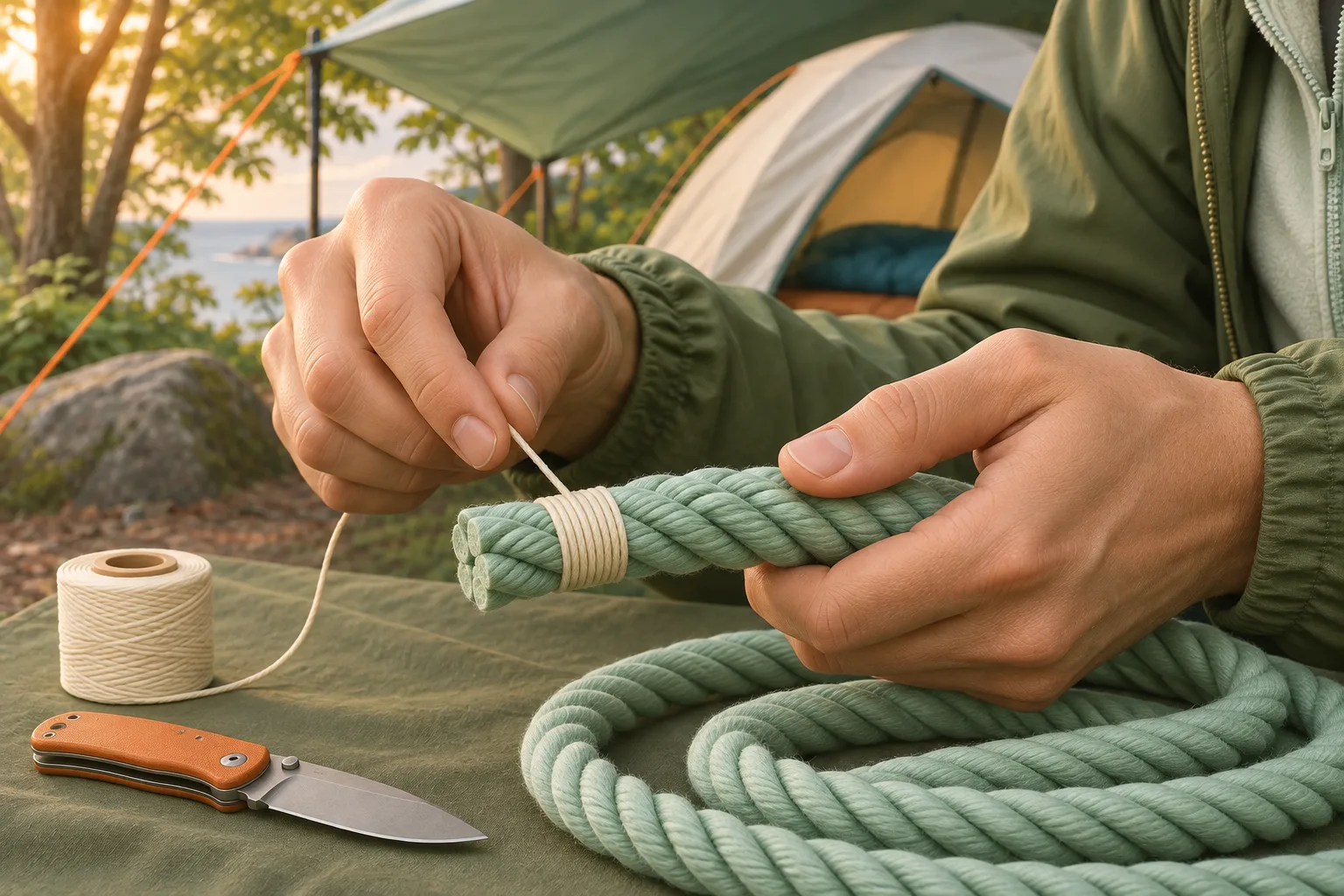
How to whip rope ends with a common whipping
The common whipping is the one to learn first. It needs no needle and holds on any rope. You need whipping twine, a knife and a scrap of tape. For half-inch rope, cut about 2 feet of twine.
Hold the end together. Wrap a turn of tape around the cut end, or tie a tight constrictor knot, so the strands stay put while you work.
Lay a loop along the rope. Fold the twine into a long loop and lay it on the rope, the bend pointing away from the end. The short tail sticks out past the cut end.
Wrap toward the loop. Start about one and a half rope widths from the end. Wind the long end tightly around the rope and the loop, each turn snug against the last, until the turns cover a band about as wide as the rope is thick.
Pass the end through the loop. Push the long working end through the bend of the loop that still shows.
Pull it under. Pull the short tail at the cut end. The loop drags the working end under the turns. Stop when the crossing sits in the middle of the whipping.
Trim. Cut both twine ends close to the turns and remove the tape.
How long should the whipping be? The Ashley Book of Knots says about as wide as the rope is thick, and on thin cord up to one and a half times is fine. Pull every turn tight. A loose whipping slides off the end the first time the rope runs through your hand.
How to whip rope ends before cutting
When you cut a length from a longer rope, put on two whippings first, a finger’s width apart, and cut between them. Both new ends are finished before they can unravel. On a rope that is already frayed, cut it back to where the strands still hold their twist, then whip it.
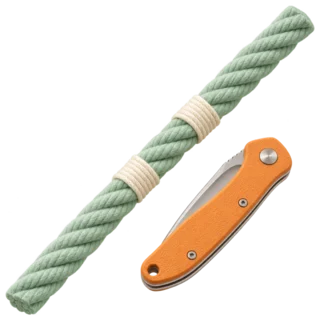
Two whippings, one cut
Whip both sides of the cut mark, then cut in the gap. No loose strands at all.
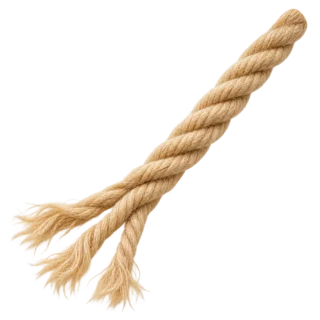
Already frayed
Cut back past the fraying, hold the strands with tape and whip the fresh end.
Ways to finish rope ends
Whipping means binding the end of a rope with turns of thin twine so it cannot unravel. It is one of several ways to finish rope ends, and the right one depends on the fiber and how long the end has to last. For camp rope we recommend a common whipping on natural fiber and whip and fuse on synthetic.
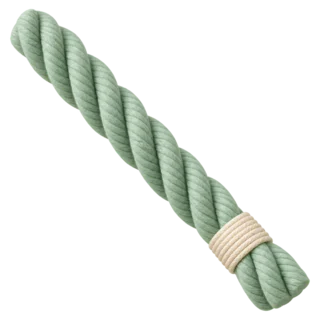
Common whipping
Twine turns over a hidden loop. Any rope, no needle. The everyday choice.
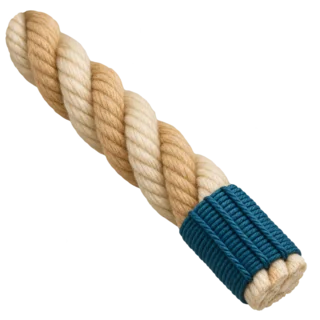
Sailmaker’s whipping
Turns locked by twine that follows the strands. The most secure; best on three-strand rope.
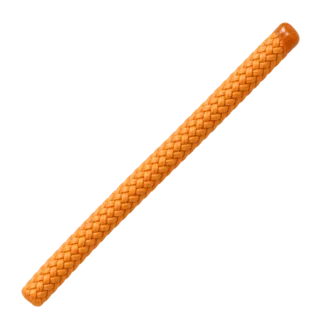
Heat seal
Melt the fibers into a cap. Synthetic rope only. Quick, but the end can turn hard and sharp.
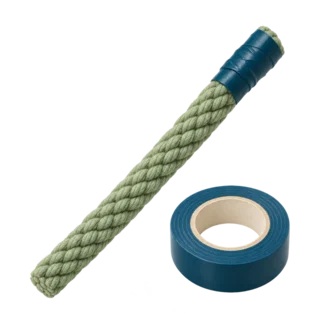
Tape
A few tight turns of electrical tape. A temporary fix until you can whip the end.
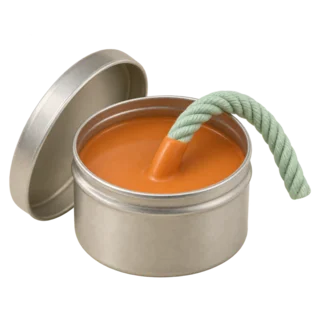
Liquid whipping
Dip the end into a rubbery coating. Works on natural and synthetic rope, but wears off in time.
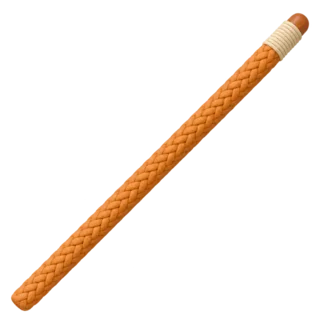
Whip and fuse
Whip a synthetic rope, then melt just the tip. A small, smooth cap; the twine takes the wear.
How to seal rope ends on nylon and polyester
Nylon, polyester, polypropylene and polyethylene rope melt, so you can seal rope ends with heat. A lighter is enough for paracord and camp cord. For thicker rope a hot knife makes a cleaner, flatter end.
Tape the cut mark. Wrap two or three turns of tape where you want to cut. It holds a braided cover and core together.
Cut through the tape. Use a sharp knife or a hot knife. A hot knife cuts and seals in one pass.
Melt the end slowly. Work outdoors and keep your fingers off the melt; molten nylon sticks to skin. Hold the end just above the clear blue part of a lighter flame and turn the rope until the fibers flow into one smooth cap. Don’t let it catch fire.
Let it cool. Melted nylon is hot and sticky for a minute. Leave it alone, then peel the tape back or leave it on.
Melted ends can cut. A blob of hard plastic on a rope end gets sharp. The rope expert Geoffrey Budworth, quoted in Wikipedia’s whipping article, tells of a tugboat operator who sliced his palm open on one. Keep the melted cap small and smooth, or whip the rope first and melt only the tip.
On braided rope, the cover and the core can shrink differently. Tape before cutting, and seal the whole end at once so the cover does not slide back. If you cut an old climbing rope for camp use, seal it the same way, and never climb on the pieces again. Some cords have an aramid (Kevlar) core that will not melt. Animated Knots suggests trimming that core a little shorter and melting the cover over it.
Cotton, jute and manila rope ends
Natural fiber rope does not melt. A flame only chars it, and the burnt end still frays. Whip these ropes. Tape or a constrictor knot holds the strands while you do it, and liquid whipping works as a quick alternative on decorative cotton or jute rope.
Synthetic rope
- Nylon, polyester, polypropylene, paracord.
- Heat seal with a lighter or hot knife.
- Whip first if people will handle the end.
- Aramid cores do not melt.
Natural fiber rope
- Cotton, jute, manila, hemp, sisal.
- Heat only scorches it.
- Whip it; a sailmaker’s whipping on three-strand.
- Liquid whipping or tape as a quick fix.
Sailmaker’s whipping for three-strand rope
A sailmaker’s whipping is worth the extra minute on a rope you will use for years. Animated Knots calls it the most secure whipping, because the outside turns of twine stop it unwinding even if one turn breaks. On three-strand rope you can tie it without a needle.
Open the end. Unlay the strands about an inch. Put a loop of twine, about 3 inches long, over one strand and let the two twine ends hang out between the other strands.
Lay the strands back. Twist the strands back together with the loop sticking out at the end. Keep the long twine end free.
Wrap toward the end. Wind the long end tightly around the rope, about six turns, working toward the cut end.
Bring the loop over. Lift the loop up the outside of the whipping, following the groove of the strand it is around, and drop it over the end of that strand. Pull the short end to tighten it.
Tie it off. Take the short end up the last open groove and tie a square knot with the long end between the strands. Trim.
Scouting America’s pioneering guide adds the West Country whipping, made of half knots tied on alternate sides of the rope. Scouting America says it works on braided, natural and synthetic rope, as long as plastic rope is melted back first.
Whipping twine, needle and tape
Any thin, strong twine will whip a rope, and wax helps it grip. Scouting America prefers waxed flax cord for camp lashings and warns that cotton string wears out and plain nylon twine slips and stretches. We suggest a few yards of waxed twine and some tape wound around a lighter in your repair kit. Together they weigh almost nothing.
Liquid whipping comes in a small tin. You dip the cut end and let it set into a flexible rubbery sleeve. It is handy at home, but on rope that runs through hands and over branches it wears off faster than twine.
Rope end questions
What is whipping a rope?
Binding the end of a rope with tight turns of thin twine so the strands or fibers cannot unravel.
Why whip the end of a rope?
A frayed end keeps unraveling, will not go through a grommet or a knot neatly and wastes rope. A whipped end stays the same size for years.
What do you use to whip a rope?
Waxed whipping twine and a knife. Tape holds the end while you work, and a sailmaker’s needle helps on braided rope.
What is the best way to seal rope ends?
On synthetic rope, tape the end, cut through the tape and melt it with a hot knife or lighter. On natural rope, whip it. For rope you handle a lot, whip it and melt the tip.
Can you seal rope ends with a lighter?
Yes, if the rope is nylon, polyester or polypropylene. Turn the end above the flame until it fuses and let it cool before touching it. Cotton, jute and manila only burn.
How do you stop rope ends from fraying?
Tape them right after cutting, then whip or heat seal them. Cut back any frayed part first.
How do you whip a rope without a needle?
Use a common whipping, which needs none, or a sailmaker’s whipping on three-strand rope, where you open the strands by hand.
What are the types of whipping?
The common (plain) whipping, the sailmaker’s whipping, the West Country whipping and the needle-and-palm whipping. Sealing, tape and liquid whipping are alternatives.
Take a rope on your next trip Pick a route and pack a short utility rope with finished ends.