
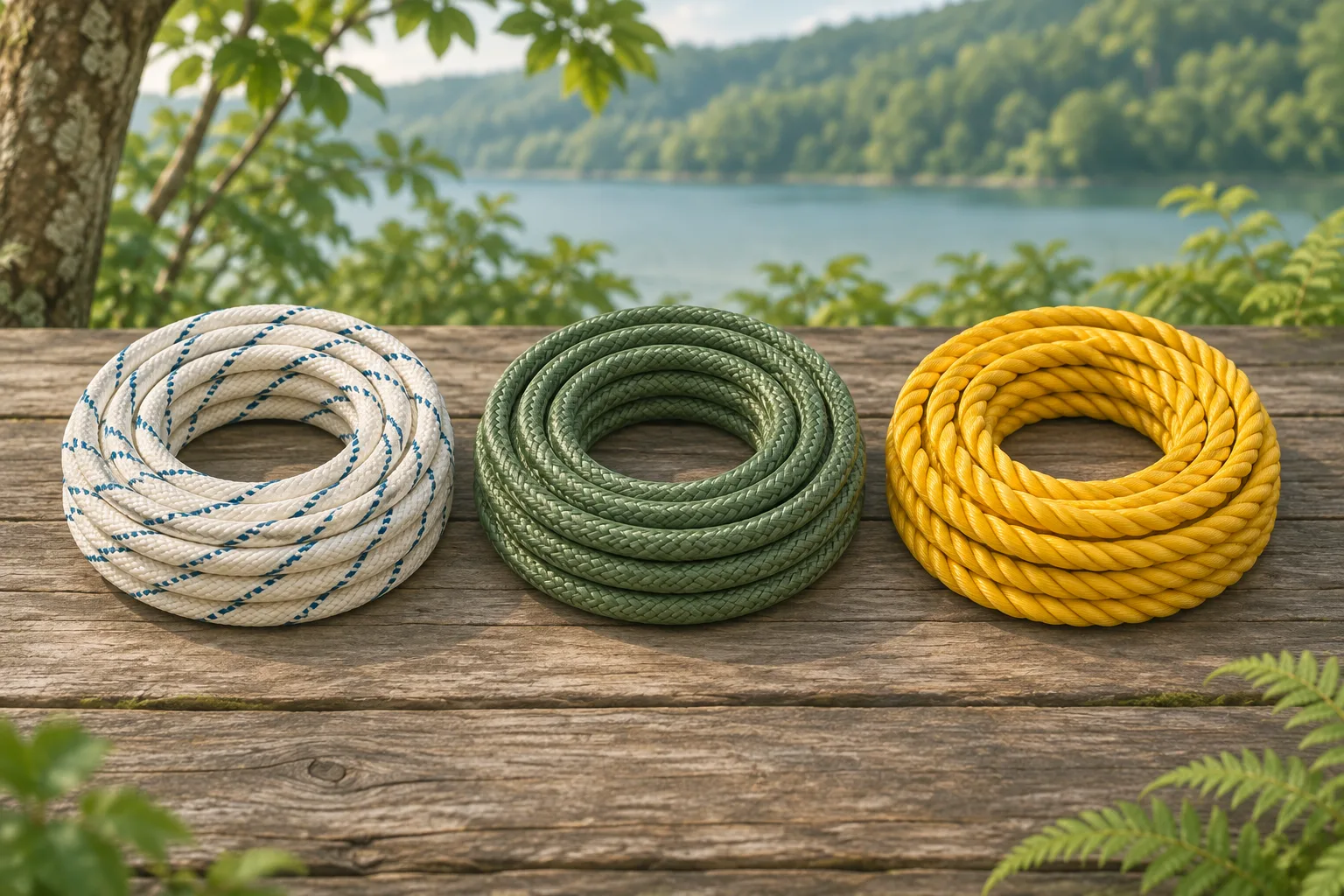
Polyester vs nylon rope: the short answer
The real difference is stretch. Both fibers are strong and last for years. Nylon stretches more, so it soaks up sudden loads. Polyester stays firm, loses almost no strength when wet and holds up better in sun. Polypropylene is the cheap third option that floats.
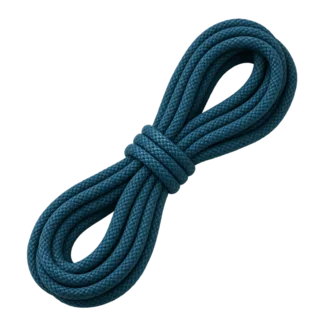
Polyester
- Stretch to break about 12%.
- No real strength loss when wet.
- Best UV rating of the three: 5 of 5 on Marlow’s scale.
- Sinks: specific gravity 1.38.
- Melts at about 480 °F (255 °C).
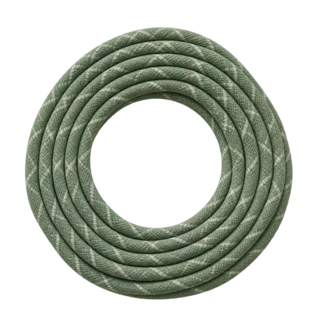
Nylon
- Stretch to break about 30%.
- Dry, slightly stronger than polyester; up to 10% weaker wet.
- UV rating 4 of 5 for UV-treated nylon; plain nylon rates lower.
- Sinks: specific gravity 1.14.
- Melts at about 460 °F (240 °C).
The numbers come from rope makers’ technical pages: Marlow for stretch, UV and density, Yale Cordage for melting points. Exact values change with construction, so treat them as a guide to the fiber, not a rating for one rope you buy.
Nylon rope vs polyester rope: strength and stretch
Is polyester or nylon rope stronger?
Dry, nylon by a small margin. Yale lists the two fibers as equal, 9.2 grams per denier, while Marlow calls dry nylon “slightly stronger than Polyester.” The difference flips once nylon gets wet: Marlow says it can lose up to 10% of its strength, and a New South Wales rigging guide puts the loss as high as 20%. Polyester barely changes. Samson sums it up: polyester is “as strong as nylon, but with much less stretch and wet-strength loss.”
Breaking strength on a label is not a working load. The Cordage Institute recommends a design factor between 5:1 and 12:1, so a rope that breaks at 6,000 lb should carry 500 to 1,200 lb in normal use. Knots and sudden jerks cut that margin further.
Does polyester rope stretch?
A little. Marlow gives polyester about 12% stretch at the breaking point, against about 30% for nylon. At a third of the breaking load, Animated Knots measures nylon at about 10% and polyester at 3.5–5%. In practice, a polyester line pulled tight stays tight, while a nylon line sags when it gets wet and loaded.
Stretch helps
Anchor lines, towing, dock lines and lead climbing. Stretch spreads a jerk over time and lowers the peak force.
Stretch hurts
Hand lines, ridgelines, clotheslines and anything you want to stay tight. Stretch here means sag and constant re-tensioning.
UV resistant rope: what lasts longest outdoors
Sun breaks down every synthetic rope, but at different speeds. Marlow rates UV resistance on a five-point scale: polyester 5, UV-treated nylon 4, polypropylene 2. Yale Cordage words it as polyester “excellent,” nylon “moderate.” For a rope that lives outdoors, such as a clothesline, a tarp ridgeline or a hand line on a trail, polyester lasts longest.
Polyester
The pick for any rope left in the sun.
Nylon
Fine for rope you carry and pack away after the trip. Left outside it fades and stiffens sooner.
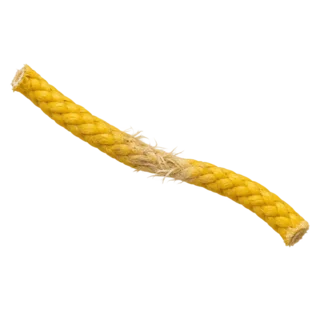
Polypropylene
The fastest to turn chalky and brittle. Certex calls it “far more susceptible to UV degradation” than the other two.
No maker publishes a lifespan for rope left outside, because sun, heat and wear vary so much. Inspect it instead: faded, stiff, chalky or fuzzy rope is weaker than it looks. Our hand line check lists the signs.
Polypropylene rope: nylon vs polypropylene rope
Polypropylene rope is the bright yellow or blue twisted rope sold in every hardware store. It is light, cheap and the only one of the three that floats, with a specific gravity of 0.91. That is why it is the classic water-ski rope.
Next to nylon, it is weaker and wears out faster. Samson’s half-inch three-strand ropes show the gap: an average of 6,300 lb for nylon against 3,400 lb for its high-tenacity polypropylene. Teufelberger notes that polypropylene’s resistance to abrasion and heat is lower than that of most other fibers. It melts at about 330 °F (165 °C), so friction from a rope sliding fast over another rope can glaze it.
Choose polypropylene for
- Rope that must float.
- Cheap, short-term lashing.
- Marking lines and light pulling.
Choose nylon for
- Shock loads: anchor, towing, mooring.
- Strength in a thin rope.
- Rope that gets heavy use and handling.
For anything that holds a person or stays in the sun, we skip polypropylene altogether.
Does polyester rope float? Water, heat and chemicals
No. Polyester (1.38) and nylon (1.14) are both denser than water and sink. Only polypropylene floats. So a float test tells polypropylene apart, but it cannot separate nylon from polyester.
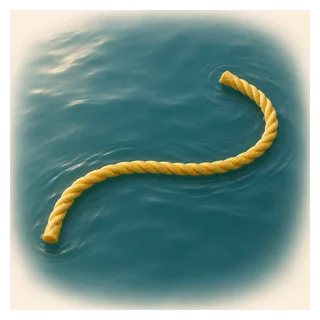
Wet
Nylon takes up water, up to 7% by Teufelberger’s figure, and gets stiff when kept wet. Polyester stays close to its dry strength and shape.
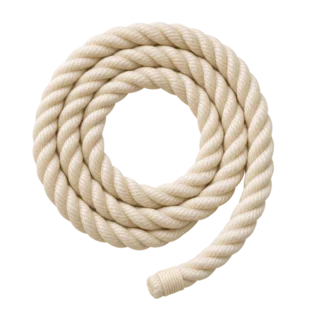
Heat
Polyester has the highest melting point of the three, then nylon, then polypropylene. Fast friction can glaze any of them.
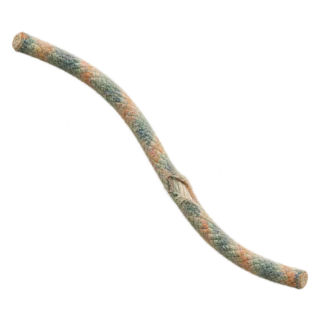
Chemicals
Marlow warns that nylon is “particularly badly affected” by most acids; polyester is attacked by strong alkalis. Keep both away from battery acid and drain cleaner.
What is polyester rope in the store?
Polyester rope is made from the same family of plastic as drink bottles, PET, spun into strong filaments. On shelves it often appears as Dacron, a trade name, or as “double braid,” with a braided polyester sheath over a braided core. Three-strand polyester is the twisted kind, cheaper per foot and easy to splice. Ropes labeled only “poly” are usually polypropylene, so read the material line on the label before you buy.
Static vs dynamic rope
Static and dynamic describe how a rope is built and tested, and they decide whether a rope may catch a fall. A static rope barely stretches: under the European standard EN 1891 it may stretch no more than 5% at 150 kg. A dynamic rope is built to stretch so it can catch a fall: EN 892 allows up to 40% elongation in its drop test.
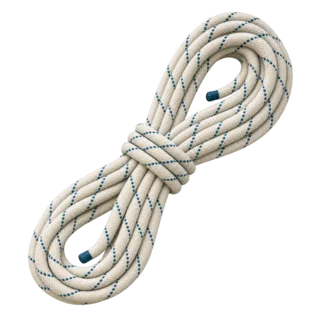
Static rope
- Nylon or polyester, kernmantle.
- Rappelling, hauling, rope access, hand lines.
- Not for lead climbing, says Sterling Rope.
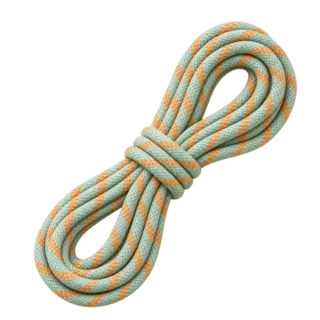
Dynamic rope
- Nylon kernmantle.
- Lead climbing and any fall onto the rope.
- Too stretchy for hauling or a firm hand line.
To tell a dynamic rope from a static one, look for EN 892 or EN 1891 (or UIAA) on the tag at the rope end. A rope without one has no tested rating for holding a person.
Utility rope is not life-safety rope. The Cordage Institute’s design factors exclude life-safety ropes, which follow their own standards. If a rope will hold a person off the ground, buy one certified for that use and follow the maker’s instructions.
Which rope for camping, hiking and home
Match the fiber to the job. These are our picks, based on the properties above.
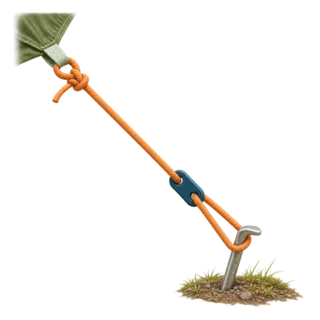
Tent guylines and tarps
Polyester or a low-stretch cord, so lines stay tight through a wet night. Nylon guylines need re-tensioning.
Hand line on a steep trail
Braided polyester static rope. If anyone will put body weight on it, buy one certified to EN 1891.
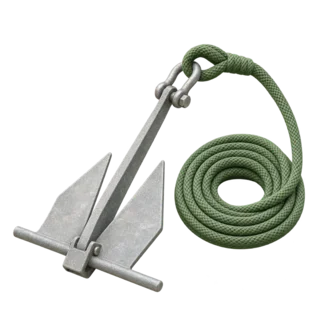
Anchor and dock lines
Nylon. Samson and Certex both recommend it where stretch must absorb shock.
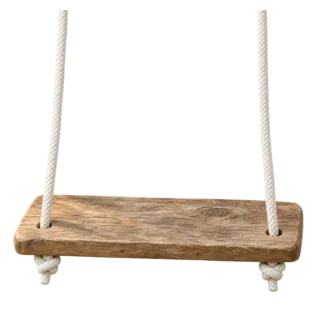
Tree swing
Polyester, for sun and low stretch, with a stated breaking strength well above the load. Protect the bark and inspect it every season.
For a clothesline or a boat cover tie-down, polyester again. Keep polypropylene for jobs where floating matters or the rope is disposable. Whatever you pick, seal the ends of synthetic rope so they do not fray.
Polyester vs nylon rope questions
Which is better, nylon or polyester rope?
For rope left outside or kept tight, polyester. For shock loads such as anchoring and towing, nylon. Both are far better than polypropylene for strength and sun.
Is nylon rope the same as polyester rope?
No. They look alike, but nylon stretches more, absorbs water and weakens when wet, while polyester stays firm and resists sun better.
Which rope is stronger, nylon or polypropylene?
Nylon, by a wide margin: in Samson’s half-inch three-strand ropes it is nearly twice as strong.
What rope lasts longest outdoors?
Polyester. Rope makers rate it highest of the common fibers for UV resistance. Inspect any rope left outside, since no maker gives a fixed lifespan.
Is polypropylene rope good for outside use?
Only short term. It fades and turns brittle in sun faster than polyester or nylon.
What rope material has the least stretch?
Among the common rope fibers, polyester. Any certified static rope, nylon or polyester, is also built for low stretch.
Does nylon rope float?
No. Nylon and polyester sink. Polypropylene is the common rope that floats.
What are the downsides of nylon rope?
It stretches, takes up water and loses some strength when wet, fades faster in sun than polyester, and is damaged by most acids.
Is rappelling rope static or dynamic?
Usually static or low-stretch, built to EN 1891. A dynamic rope also works for rappelling but bounces more.
Is nylon rope the strongest?
Of the three common fibers, nylon is strongest when dry. Wet, nylon can drop below polyester, and polypropylene is weakest either way.
Heading out with a rope? Find a route and check its steep sections before you pack.