
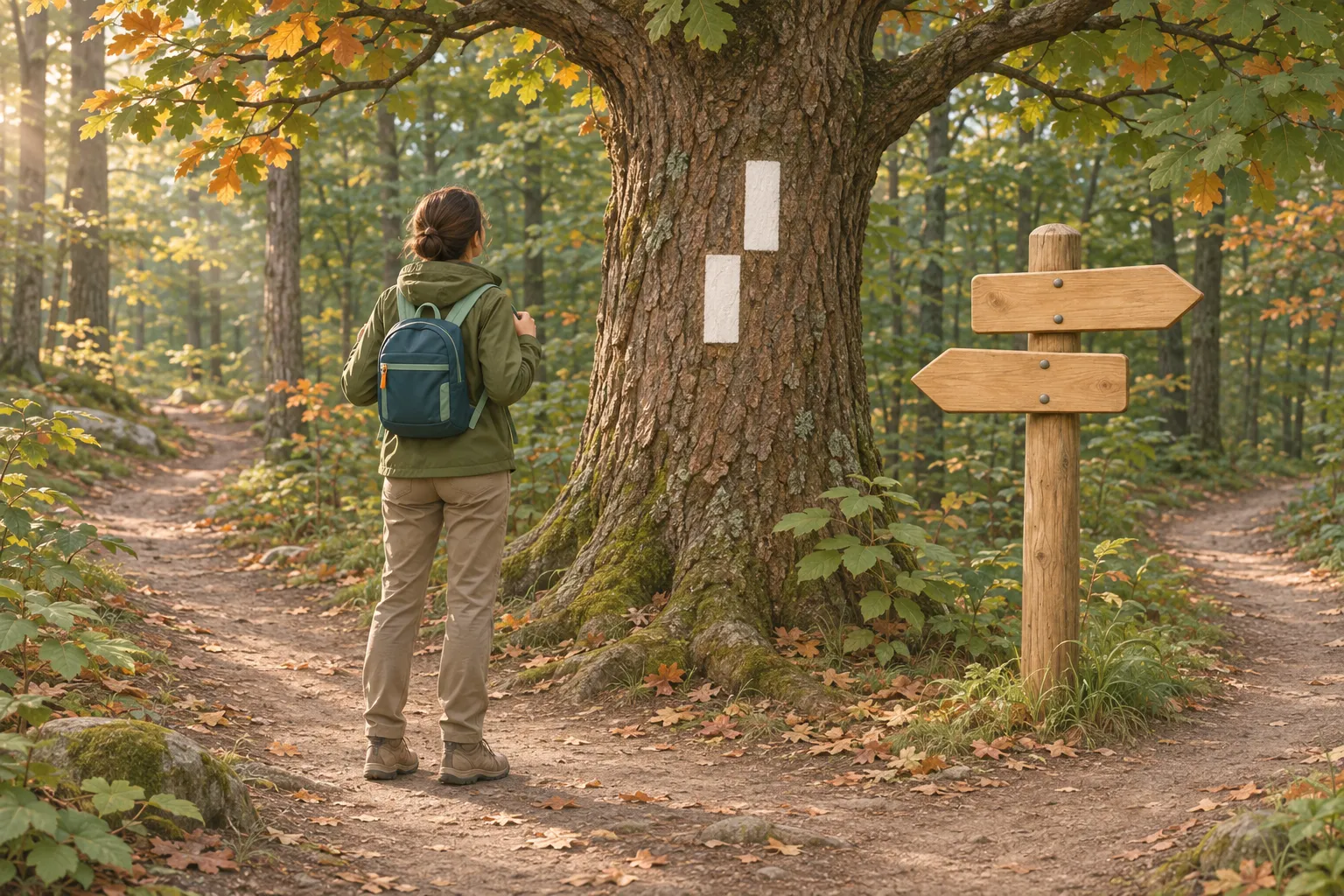
How to read trail markers: four habits
Trail markers are the marks a trail crew leaves so you can follow a path without a map in your hand. Think paint on trees, small plates, posts, rock piles and signposts. Each trail system sets its own rules, so four habits matter more than memorizing codes.
At the trailhead, find out what your trail looks like. The kiosk map or park website lists each trail’s color or symbol, for example “Ridge Trail, blue blaze.” Take a photo of the board.
Walk from marker to marker. On a well-marked trail the next one comes into view every few minutes.
Slow down at every junction. Read the signpost, then look 50–100 ft down the branch you chose. Many crews put a reassurance marker there to confirm it.
No marker for a while? Turn around. If you can clearly see the way you came, walk back to the last marker you are sure of. Then look for the one you missed, often after a turn or behind a fallen tree.
Markers work in both directions. Can’t see one ahead? Look behind you. Crews usually mark both sides of a tree, so the blaze meant for hikers coming the other way can confirm you are still on track.
Types of trail markers
The general name for trail markers is blazes, from the old practice of cutting a mark in the bark. Rock piles are called cairns, and in Britain and Europe all of these are often called waymarks. You will meet six main types.
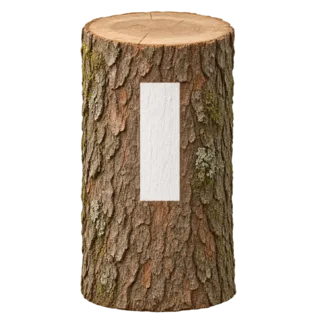
Paint blazes
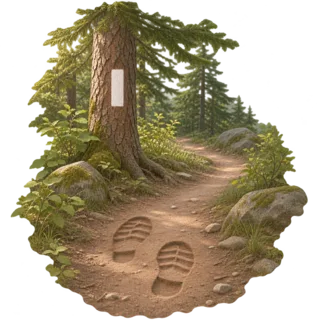
A painted rectangle on a tree or rock, about 2 by 6 inches, the size of a dollar bill on its end. The most common marker on trails in the eastern US.
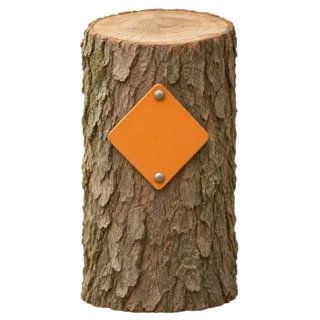
Plates and diamonds
Small metal or plastic shapes nailed to trees. Shapes include diamonds, discs, squares and trail logos.
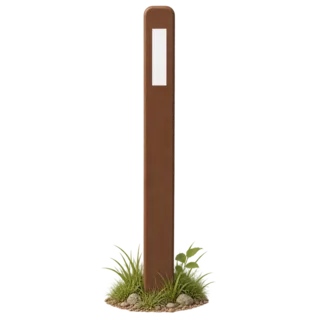
Trail marker posts
Thin fiberglass or wooden posts with a stripe or decal, used where there are no trees: prairie, desert, dunes, open meadows.

Cairns
Piles of stones on bare rock and above treeline, where paint has nothing to stick to or would vanish under snow.
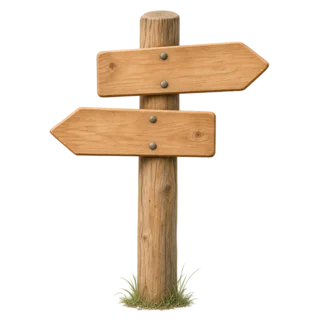
Signposts
Boards with trail names, arrows and often distances, at trailheads and junctions.

Flagging tape
Bright plastic ribbon tied on branches. Usually temporary: a reroute, a race, survey or logging work. Follow it only when you know who tied it.
How to read trail blazes
Paint blazes have a small grammar. The single blaze is universal; double and triple blazes follow conventions most eastern clubs share, but each club chooses its own version and some trails skip them entirely.
Single blaze: carry on
You are on the trail and it continues more or less straight ahead.
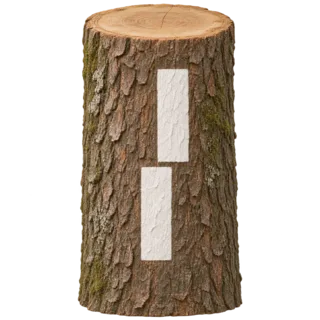
Double blaze: a turn or junction
Two blazes stacked. If the top one is offset, the trail turns that way: top to the right, turn right.
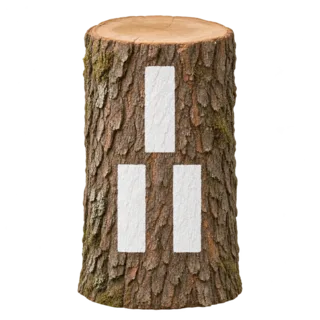
Triple blaze: a trail starts or ends
Used by the NY-NJ Trail Conference and others: one on top over two marks a start; two over one, a V, the end.
The double blaze in detail
The Appalachian Trail Conservancy lets each club pick one of two styles. In an offset double blaze the upper blaze points the direction of the change. An in-line double blaze is two rectangles straight above each other, and it only says “something changes here, look around.” Crews use double blazes for real turns and confusing intersections. So if every tree carries two stacked marks, they are probably just that trail’s symbol.
Forks need a second look. A single rectangle never tells you which way to go at a fork. If two paths leave a junction, walk a few steps down each and look for the next mark of your color.
Trail marker colors: what they mean
There is no national color code. A color identifies a trail. In the US it does not rate difficulty or show which way the trailhead is. The white blazes of the Appalachian Trail are the best-known example, and the ATC paints side trails to the AT sky blue. In another park, blue might be the main loop and white a spur. The only way to know is the trailhead map or the park’s website.
Read the color on the map legend. Trail maps print each trail in its blaze color or write it next to the name.
At a junction, follow your color. Where trails share a section, you may see two colors side by side or stacked. Stay with yours where they split.
Watch for color drift. Old paint fades: white goes grey, red turns pink, orange looks yellow. A marker shape that suddenly changes is a better clue than a slightly different shade.
Paint that is not a trail marker
Not every painted tree is a trail. Foresters and surveyors paint trees for property lines and timber sales, often as bands around the trunk or dots near the base. Texas and several other states let landowners mark “no trespassing” with purple paint: vertical stripes on trees or posts. If a mark does not match your trail’s color and shape, do not follow it.
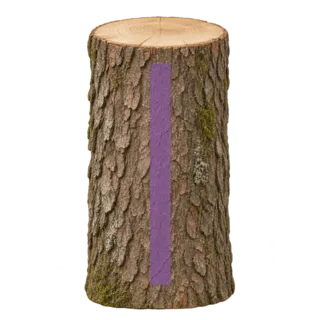
Purple paint: private land
In Texas, vertical purple stripes on trees or posts carry the same weight as a “No Trespassing” sign.
Mark you do not recognize
Go back to the last marker that matched the trailhead map and check the map again.
Cairns: trail markers made of rocks
Above treeline, on slickrock and across bare granite, the trail is marked with cairns, stacked piles of stones. To follow them, stand at one cairn and find the next before you leave it. In fog, stay at the last cairn until the next one appears, or check your map and phone; walking off in the general direction is how people lose a cairned route.
Leave cairns as you find them. The National Park Service asks hikers not to build, add to or knock down cairns. An extra pile can send the next hiker the wrong way. In parks such as Acadia the cairns are historic trail markers, rebuilt by staff. The ATC asks its volunteers to dismantle visitor-made stacks for the same reason.
Trail signs and signposts
Trail signs answer three questions at a junction: which trail this is, where it goes, and how far. Read the whole board before you pick an arrow.
Trailhead signs and kiosks. The map board shows every trail with its color, length and often a difficulty rating. Rules, closures and warnings, such as bears or high water, are posted here too.
Junction signposts. Each arm names a trail or destination and usually a distance. The arm points down the path, not straight at the destination.
Mile markers. Some trails post mileage on small markers along the way. Treat distances on any sign as rough: reroutes change trail length and old boards are not always updated.
Closed or not maintained. A “trail closed” sign, or logs and brush laid across an old path, usually mean the route has moved. Follow the new markers.
How far apart are trail markers? There is no single rule. The ATC aims for about one blaze every 5 minutes on obvious trail, with more at junctions and road crossings. Away from junctions, only one should be visible at a time. Remote wilderness trails may have few markers or none: federal wilderness areas keep markings to a minimum, so you navigate by map there.
Trail signs in Switzerland and Europe
Many European countries use a national system, which makes markers carry difficulty as well as direction. In Switzerland, yellow signs and diamonds mark ordinary hiking trails; white-red-white means a mountain trail with steep, narrow or exposed sections; white-blue-white an alpine route that crosses unmarked terrain, snow or glaciers. In France, the long-distance GR paths carry a white stripe over a red one, and a cross in the trail’s colors means you have taken a wrong turn.

Yellow, Switzerland
Hiking trail for anyone with ordinary fitness and shoes. Signs give walking times.
Check the local key
Every country and many regions publish their marking key. Read it before your first hike there.
When the trail markers stop
Getting off a marked trail rarely takes more than one missed turn. Our rule: if a trail had markers every few minutes and you have walked well past that without one, stop.
Stop where you are. Pushing on in the hope that a marker turns up is how a small detour becomes a long one.
Retrace to the last marker you are sure of. Only if you can see the way you came. From there, look for the turn you missed.
Check the map on your phone. An offline map with GPS shows if you are off the line within seconds.
Still unsure? Stay put. Call 911 if you have signal (112 in Europe), or blow three whistle blasts, the standard call for help. Rescuers find people who stay in one place more easily.
Markers can disappear. Paint fades, trees fall, snow buries cairns and signs disappear. Carry a map, and know how to use your phone or a compass when the markers run out.
Practice on your next hike
We suggest one simple exercise. On a trail you know, put the phone away and call out each marker as you see it. Count how long you walk between them. At each junction, decide on your own, then check the sign. After one hike you will notice markers you used to walk past.
Trail marker questions
How do trail markers work?
A trail crew marks the path at regular intervals with paint, plates, posts or cairns in one color or shape for each trail. You walk from one marker to the next. Extra marks warn of turns, junctions, starts and ends.
What are trail markers called?
Usually blazes, whatever they are made of. Rock piles are cairns. In the UK and Europe the general word is waymarks.
What do two trail markers mean?
Two blazes stacked on one tree are a double blaze: a turn or junction is coming. If the top one is offset, it shows the direction of the turn. On a few trails two stacked marks are the regular symbol, so check the trailhead key.
What does a triple blaze mean?
On trails that use them, three blazes mark the start or end of a trail. The NY-NJ Trail Conference puts one over two at the start and two over one, a V, at the end.
What color are Appalachian Trail markers?
White, 2 by 6 inch painted rectangles. Side trails to the AT are blazed blue.
What do the colors of trail markers mean?
Only what the local map says. A color usually identifies one trail. It does not rate difficulty in the US, though some countries, such as Switzerland, do use colors for difficulty.
What are rock trail markers called?
Cairns. Do not build, add to or knock them down; the National Park Service asks hikers to leave them alone.
What are the different types of trail signs?
Trailhead boards and kiosks with the map and rules, junction signposts with trail names, arrows and distances, mile markers along the trail, and warning or closure signs.
What does purple paint on trees mean?
In Texas and several other states it means private property, no trespassing. It is not a trail marker.
Practice on a marked trail Pick a route and check its map and markers before you go.