
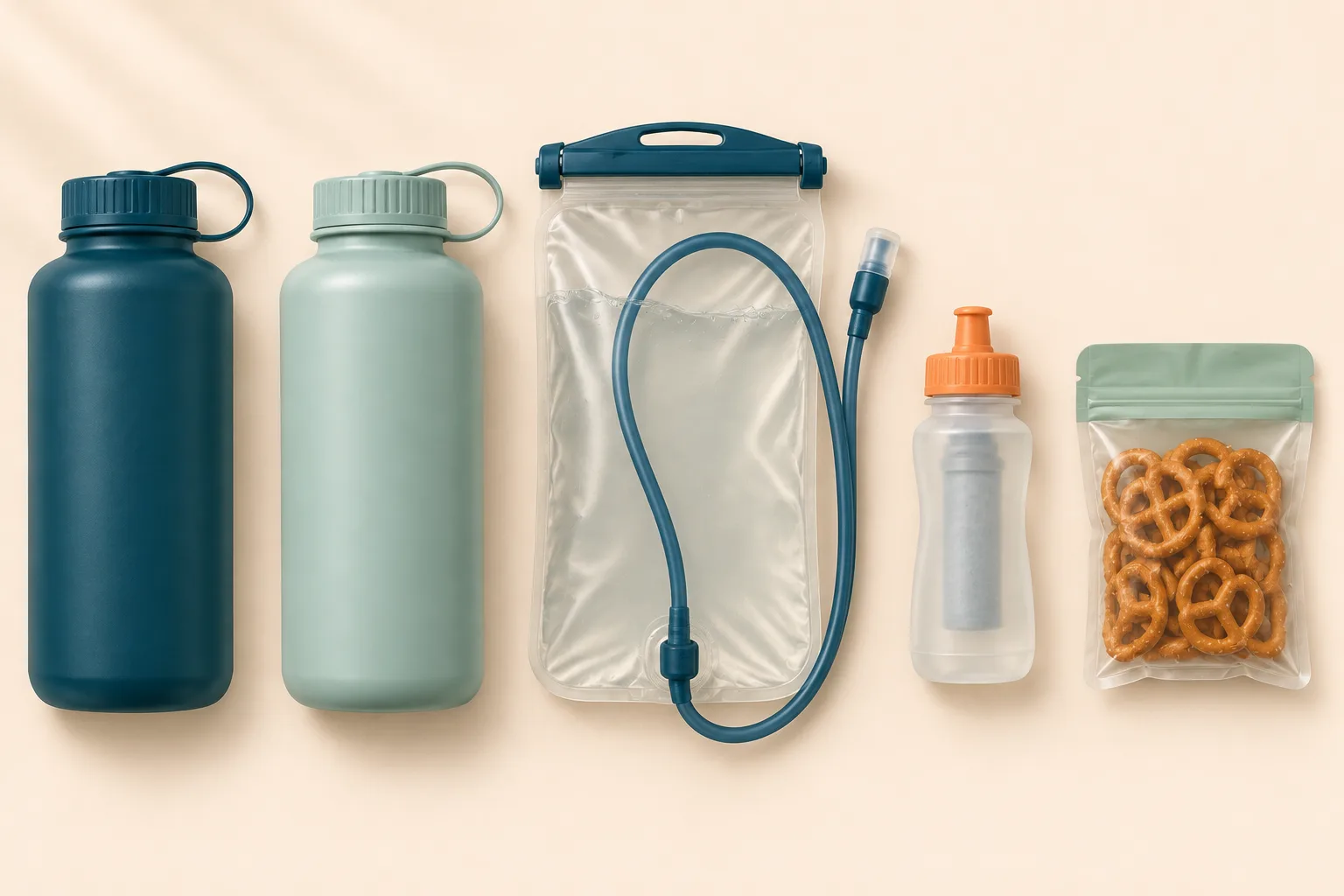
How much water to bring on a hike: a three-step calculator
Our rule of thumb is short: count the hours, multiply, add a bottle. Two hikes of the same length can need very different amounts: one is a shaded stroll, the other a sunny climb that takes twice as long. The American Hiking Society suggests planning half a liter of water per hour in moderate temperatures and terrain. REI’s hydration guide notes that strenuous hiking in high heat may need a liter or more per hour.
Estimate your time on the trail. Use the trail description or your own pace. Add time for steep climbs, breaks and a slower return.
Multiply by a rate for the conditions. Around 0.5 L (17 oz) per hour for moderate effort in mild weather; plan toward 1 L (34 oz) per hour or more in heat or on hard climbs.
Add a reserve you do not plan to drink. An extra bottle covers a wrong turn, a slow partner or a hotter afternoon.
Water calculator
Treat these numbers as a first guess. Body size, sweat rate, fitness, humidity and altitude all change what you need. Note what you drink on your next few hikes, then set your own per-hour rate.
How much water to carry on a day hike: examples
These examples show how much water to pack for common hikes. Each one applies the rates above and assumes no refills on the way.
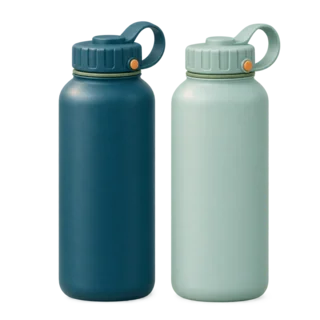
2–3 hours, mild weather
Roughly 1–1.5 L (34–51 oz). About 4–6 miles on gentle ground. One 1 L bottle plus a small spare covers it.
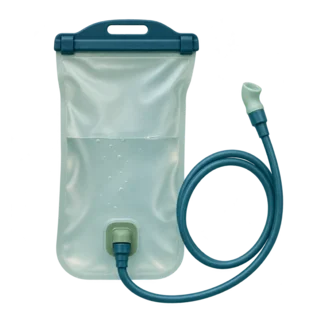
4–6 hours, moderate climb
Roughly 2–3 L (68–101 oz). About 7–10 miles with some climbing. A reservoir or two to three bottles.
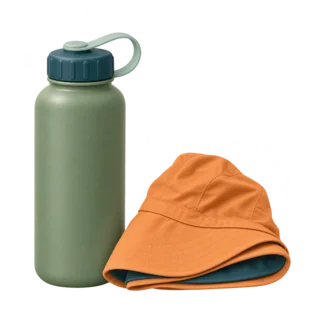
Any length in heat or sun
A 4-hour exposed hike can take 4 L or more. Heat drives that number, so a dawn start lowers how much you need.
Then lift the pack. One liter weighs about 1 kg (2.2 lb), so three liters is a full bag of groceries on your back. If the total feels too heavy to carry comfortably, shorten the route or choose a cooler time rather than cutting your reserve.
Two of our own hikes
Near Florianópolis, Brazil, in spring: 22–25 °C (72–77 °F). Shorts-and-T-shirt weather, warm but not hot. Both routes are on Boramundo with the full track and photos.
Morro do Assopro trail to Costa da Lagoa
- 7.5 mi
- 3:40 h
- 2 500 ft
Morro do Assopro trail to Costa da Lagoa: 7.1 mi through forest, from the Lagoa church to the waterfall, with lookouts and a Cooperbarco boat back.
Saquinho Beach Trail from Solidão Beach, Florianópolis
- 1.7 mi
- 1:30 h
- 630 ft
The Saquinho Beach trail from Praia da Solidão (Solidão Beach) to Praia do Saquinho, there and back on the concrete path, with a side trip to the Cachoeira da Solidão.
Morro do Assopro to Costa da Lagoa: 11.5 km (7.2 mi), about 760 m (2,500 ft) of climbing, roughly 3.5 hours of walking and 6 hours in total, mostly under forest. Our editor carried 1.5 L (51 oz), and it was enough. That is lean: the per-hour rate gives about 3 L for 6 hours and about 1.75 L for the walking time alone. A sunny summer day would need well over 3 L.
Solidão to Saquinho: 2.8 km (1.7 mi) there and back, 195 m (640 ft) of climbing, about 1.5 hours with partial shade. Half a liter (17 oz) lasted. The rate gives about 0.75 L, so this was lean too; the walk is short and partly shaded.
Neither route has a verified refill, and the streams on them are not a drinking source. All of it came from the trailhead.
What raises or lowers the amount
Heat, sun and humidity
You sweat more in hot sun and humid air. Shade and an early start reduce the load.
Climbing and pace
Steep or rough trails take longer and make you work harder. Budget for the extra hours.
Cold and altitude
You may feel less thirsty in cold or dry mountain air, yet still lose water through breathing and effort. Keep drinking at breaks.
In extreme heat, change the plan as well as the load. Desert parks such as Grand Canyon advise hiking outside the hottest hours and resting in shade. Follow the local park’s heat guidance, and change the route or the day if conditions are beyond your plan. Heat exhaustion shows as heavy sweating, cool clammy skin, dizziness, nausea or cramps: stop in shade and cool down. Confusion, or skin that feels hot whether dry or damp, can mean heat stroke: call emergency services (911 in the US, 192 in Brazil).
Plan refills before you rely on them
Only count sources you can confirm. The National Park Service notes that some hikes have reliable water and others do not. Even park taps can be out of service: at Grand Canyon, only two trails have potable spigots and these may be shut off. Check current trail conditions with the land manager before you go.
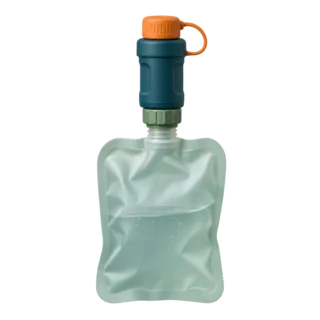
With a confirmed source
- Carry enough to reach it, plus a reserve in case it is dry.
- Treat natural water: filter, then boil or use chemical treatment as directed. Skip water with an algae bloom.
- Collect moving water away from campsites and animal areas; avoid stagnant pools.
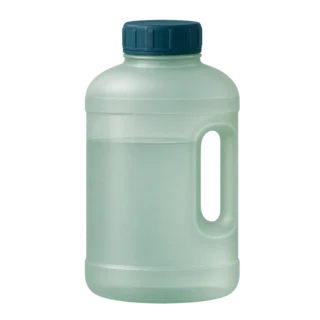
Without one
- Carry the whole day’s water from the trailhead.
- Leave extra water in the car for the drive home or an early return.
- Shorten the plan if the full amount is too heavy.
Clear water can still be unsafe. The NPS advises never drinking from a natural source you have not purified, even if it looks clean. Grand Canyon’s safe-water page adds that filtering alone is not enough there, and that standard filters, boiling and chemicals do not remove toxins from cyanobacteria blooms. Follow the treatment rules for your area.
How much water to drink while hiking
You will not drink everything you carry, and that is the point. Coming home with half a bottle means the reserve did its job.
Start hydrated. Drink before you leave so you are not trying to catch up on the first climb.
Sip at regular breaks. Small sips go down easier than large amounts at once. Keep a bottle or tube within reach so drinking does not mean unpacking.
Eat salty snacks on long or hot hikes. You lose salt as well as water when you sweat. Grand Canyon recommends salty foods and some electrolyte replacement alongside plain water.
Check your water at the turnaround. You need half your drinking water plus the whole reserve for the way back. If you have less, head back now.
Do not drink large amounts of plain water at once. Drinking too much water while losing salt through sweat can lower blood sodium (hyponatremia). Grand Canyon lists nausea, confusion and frequent urination among the signs. Pair water with food and salty snacks, and get help if someone becomes confused or very unwell.
Water bottle or bladder: which to carry
Water bottles
A hiking water bottle is quick to refill, and you can see exactly how much is left. Keep one in a side pocket you can reach while walking.
Bladder (reservoir)
A hydration bladder lets you sip without stopping and carries weight close to your back. Harder to check the level; refill and clean it carefully.
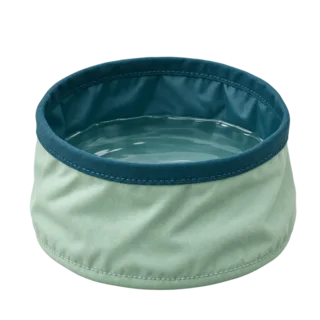
Hiking with a dog
Carry your dog’s water in your pack with a collapsible bowl, so it does not share your bottle or drink from streams.
Water check before you leave
How much water to bring on a hike: quick answers
How much water should I bring per mile?
There is no reliable per-mile number, because a flat mile and a steep mile take very different time and effort. Convert the route to hours first. At an easy 2–3 mph on flat ground, 0.5 L per hour works out to roughly 0.17–0.25 L (6–8 oz) per mile; climbing and heat raise that.
How much water for a 5, 7 or 10 mile hike?
For moderate effort in mild weather, plan roughly 1–1.5 L for 5 miles, 1.5–2 L for 7 miles and 2–2.5 L for 10 miles. Add more for heat or a big climb, and always carry a reserve.
How much water for an 8, 12 or 15 mile hike?
At a moderate 2–2.5 mph in mild weather: 8 miles take about 3.2–4 hours (around 2 L); 12 miles, 5–6 hours (2.5–3 L); 15 miles, 6–7.5 hours (3–4 L). On a long hike, a confirmed refill halfway saves carrying all of it. Heat and climbing push every figure up.
How much water for a 3 hour hike?
About 1.5 L (51 oz) in mild weather at moderate effort, plus a small reserve. Plan toward 3 L or more if it is hot and exposed.
How much water for a 6 hour hike?
About 3 L (101 oz) in mild weather at moderate effort, plus a reserve. In heat it could double, and 6 L weighs 6 kg (13 lb). Start early, pick a shaded route or plan a refill.
How much water to bring hiking per day?
For a full day of 6–8 hours on the trail, roughly 3–4 L (101–135 oz) in mild weather and up to twice that in heat. That is usually too heavy to carry, so plan refills and treatment. Backpackers also need water for cooking.
Is 2 liters enough for a day hike?
For about 3 hours in mild weather at moderate effort, yes, with a little reserve. On a 4-hour hike it leaves almost none, and in heat it runs out. Estimate your hours and conditions rather than relying on a fixed amount.
How much water to bring for a dog on a hike?
There is no single number: size, coat and heat change it, so ask your vet for one. Carry your dog’s water separately, with a bowl, and offer it at every break. Arches National Park lists heavy panting, vomiting, diarrhea and confusion as heat warning signs: rest in shade and cool the dog with water. Keep dogs out of streams and ponds too; Zion warns they can swallow cyanobacteria toxins.
How much water for a 2 day or overnight backpacking trip?
Multi-day trips usually depend on refilling and treating water rather than carrying it all. Use the same per-hour rate for each hiking day, add water for cooking, and confirm sources along the route. This guide covers day hikes.
Work out your water, then check the whole kit. Use the day-hike checklist and pack water where you can reach it.