
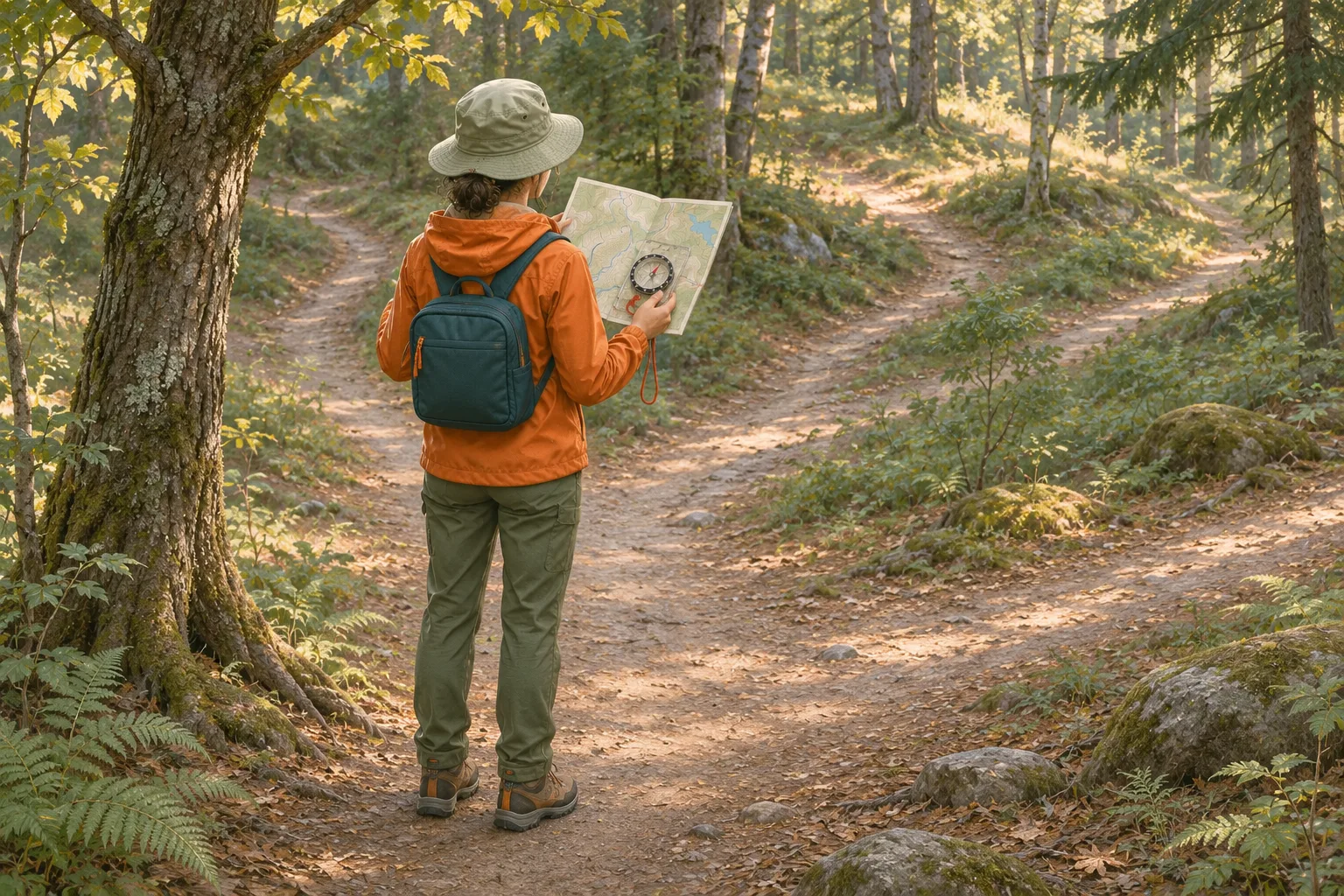
Getting lost in the woods usually starts small. You take a wrong fork, keep walking because the next bend might look familiar, and a short detour turns into a long search. A search and rescue coordinator in Utah told KSL that the most common reason people get lost is leaving the trail or their group.
We wrote this guide around one idea: the moment you suspect you are lost, your job changes from reaching the trailhead to being found. The steps below follow the National Park Service outdoor emergency plan and the STOP method taught by the USDA Forest Service.
What to do if you get lost in the woods
Work through these steps in order. Read them once at home, because it is hard to think clearly when the light is fading and every tree looks the same.
Stop and breathe. Sit down if it helps. Drink some water and eat a snack. Panic makes people walk fast in no particular direction.
Retrace your steps only if it is safe. Go back only if you can clearly see the way you came, such as fresh footprints or a marker you just passed.
Call 911 if you can. Tell the dispatcher your last known location and what happened. Keep the phone on afterward so they can call back.
Stay put. The NPS plan says to move only if there is an immediate threat to life. Searchers start from where you were last seen or last known to be.
Shelter and save energy. Put on layers before you get cold and get off wet ground. Then check what you carry.
Make yourself easy to find. Blow your whistle often and answer anyone who calls your name.
If the way back is not obvious, stay where you are. In Olympic National Park, the wilderness safety page is blunt about it: stay put, and you will be found sooner.
The STOP method: Stop, Think, Observe, Plan
STOP is a memory aid from the Forest Service and many search and rescue teams. Its value is that it slows you down before you make a decision you cannot undo.
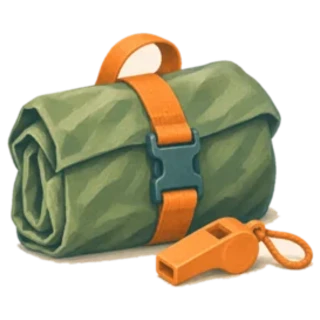
Stop
As soon as you suspect you are lost, stop walking. Stay calm and stay where you are.
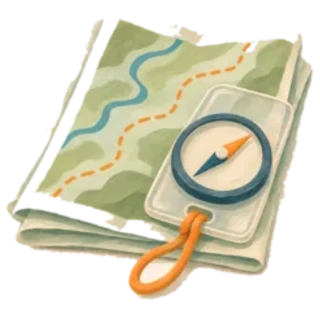
Think
When did you last know where you were, and how long ago was it?
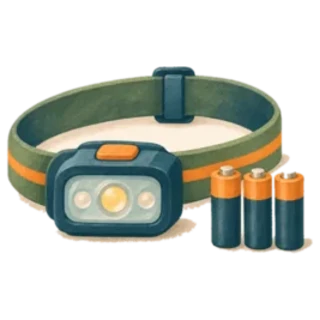
Observe
Look and listen for landmarks, a road or the trail you came on. Check your map, phone and the light you have left.
Plan
Choose one plan you can carry out, usually to call for help and wait. Only go back if the way is certain.
Be honest during the Think step. If you are not sure, you are lost. Walking on in hope is how a mild navigation mistake becomes a multi-day search.
Why you should stay put when lost while hiking
Being lost while hiking feels like a problem you should solve by moving. Search teams see it the other way around. “We’re always going to search from the last point seen,” Salt Lake County coordinator Keith Larsen told KSL. “If the lost hiker is moving around, that makes it a lot harder for searchers to find them.”
Moving also uses up daylight and raises your risk of a fall. Following a stream feels logical. Olympic National Park staff warn that rivers and creeks are often the most dangerous routes in that park.
When moving is the right call. Move only if the place you are in is immediately dangerous: rising water, rockfall, lightning on an exposed ridge or a fire. Go to the nearest safer spot, then stop again and stay there.
Call 911 or text 911: using your phone well
If you have any signal, call 911 first. The national 911 program puts it simply: call if you can, text if you can’t. Text to 911 is not available in every area, so a call is the better first try. Outside the United States and Canada, use the local emergency number; in much of Europe it is 112.
Tell the dispatcher your last known location, such as the trailhead, the junction or the lake you passed, and what you can see now. If your phone shows coordinates in a map app, read them out. Then follow their instructions.
Do not hike around looking for better signal. Go only to a nearby spot where you know your phone worked, and come back if it fails. After the call, save battery: switch on battery saver, check the phone only at set times and keep the phone warm inside your jacket. A personal locator beacon or satellite messenger works without cell coverage; use it according to its instructions.
Signal and wait: help search and rescue find you
Once you decide to stay, your job is to be seen and heard. Search and rescue teams look from the ground and sometimes from the air, and both need something to notice.
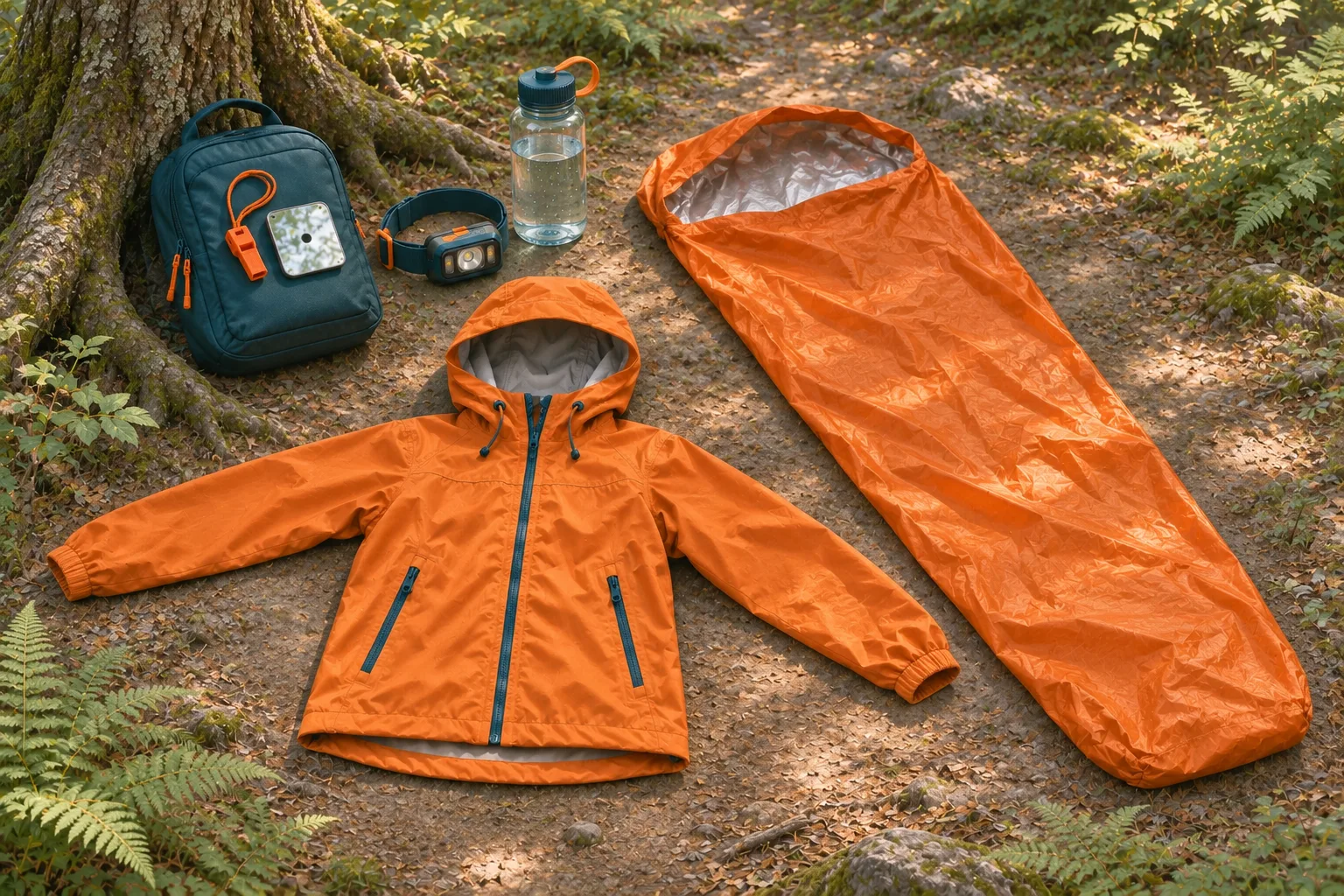
Sound. A whistle carries over wind and running water long after your voice gives out. Blow it often, and answer when you hear people calling.
Light and flashes. Use a signal mirror toward aircraft. At night, the NPS plan suggests flashing SOS with a light: three quick, three slow, three quick.
Color on the ground. Spread bright clothing or an emergency bivy in the nearest clearing, or lay out rocks in a large shape that stands out from above.
If the canopy above you is thick, move a short distance to a clearing you can see from where you stopped. Stay near it, and put your signals out before you need them.
Lost in the woods at night
If darkness comes while you are lost, stop moving. Walking at night in unfamiliar terrain is how people sprain ankles and fall, and it rarely makes you easier to find.
Before the light goes, put your headlamp and spare layers within reach. Put on warm clothes early, while you are still dry. Sit or lie on your pack or a pile of dry branches so the ground does not draw heat from your body. Get out of the wind, and use your emergency shelter.
Keep the headlamp ready but switched off to save power. Turn it on and use it to signal when you hear voices or a helicopter.
Water and food while you wait
Check what you carry and drink and eat normally at first. A fed, hydrated body keeps you warmer, and a clear head makes better decisions. Staying still and warm uses less energy than searching for food.
Do not eat wild plants, berries or mushrooms you cannot identify with complete certainty. If you must drink from a natural source, treat the water if you can. For how much water to carry next time, see our hiking water guide.
How to find your way when you are sure
Sometimes you are only briefly disoriented. You can find your way back alone, but only when three things are true. You know where you last were. You can find that place on the map. The route between is safe in daylight.
Orient the map with your compass and match it to a ridge or lake you can see. Then head for a large “catching” feature like a road or the trail itself. Our map and compass guide and the beginner compass guide show how. If any of the three conditions is missing, go back to STOP and stay put.
If you are hiking with kids or alone
Teach children the Hug-a-Tree rule that search teams teach in schools and the NPS repeats: if you are lost, find a tree, hug it and stay put. A child who stays in one place is far easier to find. Give each child a whistle and tell them that blowing it is not a game, and that answering searchers will not get them into trouble.
If someone in your group goes missing, the NPS advises: do not go looking for the person off trail. Call 911, or if you cannot, turn the group around and go to the nearest ranger station or visitor center for help.
Alone, nobody expects you back until you tell them. So tell a trusted person your route and when to raise the alarm before you leave. If you get lost and still have a bar of signal, text them your last known location too.
How to avoid getting lost while hiking
The best way to avoid getting lost is to plan a hike you can actually navigate, and to notice early when something feels wrong. We check these before every outing.
On the trail, look back at junctions so you know what they look like on the return, stay with your group and set a turnaround time. The ten essentials cover the rest of the gear that turns a night lost in the woods into a cold but manageable wait.
Questions about getting lost in the woods
What are you supposed to do if you get lost in the woods?
First stop and think about where you last knew your position. Go back only along a route you can clearly see. If you cannot, call 911 when you have signal, then wait where you are and make yourself easy to find.
What does the STOP acronym stand for?
Stop, Think, Observe, Plan. Stop moving, think about how you got here, observe your surroundings and supplies, then plan one sensible action, usually calling for help and staying where you are.
Should you follow a river if you are lost?
Usually no. In steep country a stream can lead into a gorge or over a waterfall, and moving makes you harder to find. Olympic National Park calls rivers and creeks often the most dangerous routes in that park.
What happens if you get lost in the woods and call 911?
The dispatcher passes your details to the agency responsible for search and rescue in that area, often the county sheriff. Keep your phone on, conserve battery and stay where you told them you are.
Can you text 911 if a call will not go through?
In many areas, yes. Text to 911 is not available everywhere, so try a voice call first, then a text with your location and the problem.
What should I eat if I am lost in the woods?
Eat the food you carried. Do not eat wild plants, berries or mushrooms unless you can identify them with complete certainty. Rest and stay warm to save energy.
Prepare before your next hike. Pack the safety systems that keep a wrong turn from becoming an emergency, and practice navigation where you know the way.